

To achieve results that standard weight training alone cannot replicate, incorporating some form of cardiovascular training is essential. Whether referred to as conditioning, metcon, or simply “cardio,” there are two main approaches to cardiovascular training.
The first approach is steady-state cardio training, where a consistent speed or intensity is maintained throughout the entire workout without breaks. The second approach is interval training, which involves alternating periods of work with periods of rest.
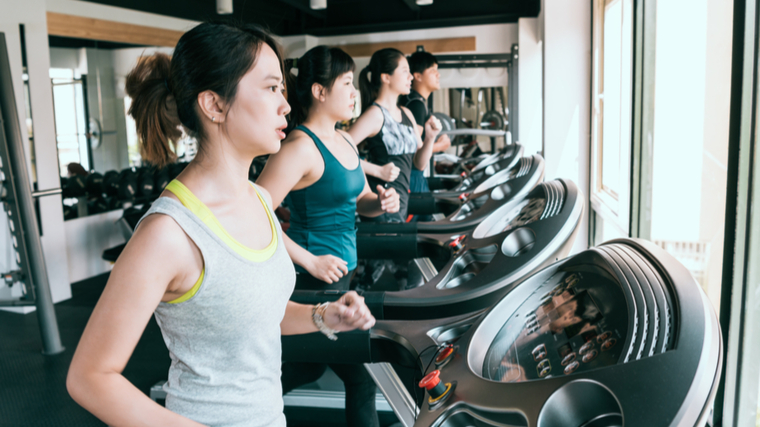
One particularly effective form of interval training is HIIT — high-intensity interval training. This training protocol involves alternating periods of high effort with periods of recovery throughout the workout.
The key to HIIT workouts is the emphasis on high intensity. For optimal results, aim to exert close to maximum effort during each work interval, rather than simply working at a challenging level.
Many generic HIIT workouts found online may be labeled as “intense” due to short rest periods and insufficient recovery, rather than requiring high intensity output during the work intervals. While this approach has its place in a workout routine, it differs from truly high intensity workouts.
Limit HIIT workouts to no more than three days per week. If performing them on consecutive days without rest, reassess the level of “high intensity” exerted during each interval.
The Best HIIT Workouts
One-Dumbbell HIIT Workout
This workout is time-based using an AMRAP approach, which stands for As Many Rounds As Possible. Start a timer before the first rep of the first exercise and work continuously through the series of exercises until the timer ends, avoiding strict sets.
The workout consists of a sequence involving one lower body exercise, one upper body exercise, and an ab exercise. This structure enables continuous movement while giving the engaged muscle groups brief rest periods before repeating an exercise, maintaining high overall training intensity throughout the session.
Goblet Squat
- How to Do it: Hold the dumbbell in front of your chest with both hands on one side of the weight. Squat down by bending at the hips and knees while maintaining an upright torso. Keep your elbows close to your ribs and the weight near your chest throughout the exercise.
- Sets and Reps: 12 reps
- Rest time: Move to the next exercise without rest.
Single-Arm Floor Press
- How to Do it: Lie on the ground with the dumbbell in one arm. Extend the arm above your chest in a locked out position. Lower the weight as if performing a dumbbell bench press. Maintain control to avoid bouncing the arm off the ground.
- Sets and Reps: 5 reps per arm, 10 total reps
- Rest time: Move to the next exercise without rest.
Alternating Jackknife Raise
- How to Do it: Lie on the ground with legs extended and arms by your sides. Raise one leg while reaching the opposite arm above your body until hand and foot meet, performing a total-body sit-up motion. Alternate sides with each repetition.
- Sets and Reps: 4 reps per side, 8 total reps
- Rest time: Move to the first exercise without rest. After three minutes of continuous work, rest for one minute. Perform two sets of three minutes each.
One-Kettlebell HIIT Workout
While many exercises can be done with either a dumbbell or a kettlebell, the unique shape and center of mass of a kettlebell make it preferable for certain exercises. This workout uses a kettlebell to enhance muscle recruitment and increase explosive output, following an AMRAP approach – as many rounds as possible.
Goblet Clean
- How to Do it: This dynamic movement involves bringing the kettlebell from the floor to a near chin-level goblet position in one powerful motion. Stand with feet shoulder-width apart, squat down to grab the kettlebell, stand up explosively, and transition the weight to the “horns” of the kettlebell at chest height.
- Sets and Reps: 12 reps
- Rest time: Move to the next exercise without rest.
Single-Arm Push Press
- How to Do it: Stand with feet slightly wider than shoulder-width, hold the kettlebell in one arm, and use a short-range squat to generate force while pressing the weight overhead. Lower the weight under control and repeat for both arms.
- Sets and Reps: 5 reps per arm, 10 reps total
- Rest time: Move to the next exercise without rest.
Straight-Arm Sit-Up
- How to Do it: Lie on the ground with legs bent, perform a sit-up bringing your chest to your knees while extending your arms overhead. Return to the starting position with control.
- Sets and Reps: 8 reps
- Rest time: Move to the first exercise without rest. After three minutes of continuous work, rest for one minute. Perform two sets of three minutes each.
EMOM HIIT Workout
EMOM training involves performing one set of an exercise every minute on the minute. You have 60 seconds to complete a set of reps, using the remainder of the minute as rest before starting the next set. This method encourages working harder and faster to earn more rest time.
While the typical EMOM utilizes one-minute periods, the timeframe can be adjusted. This flexibility allows for a higher volume of work with more reps per exercise or more exercises per workout, aiming to complete each phase efficiently for adequate rest.
In this HIIT workout – “E4MO4M” or “every four minutes on the four minutes” – aim to complete all work within four minutes. Use varying weights to challenge reps but pre-arrange them for efficiency.
Strive to finish all 102 repetitions in three to three-and-a-half minutes to allow for rest before the next set. Perform three to five total circuits for a 12 to 20-minute workout.
- Single-arm dumbbell row: 15 reps per arm, 30 reps total
- Single-arm clean: 12 reps per arm, 24 reps total
- Single-arm push press: 10 reps per arm, 20 reps total
- Goblet squat: 16 reps
- Alternating reverse lunge: 6 reps per leg, 12 reps total
Bodyweight HIIT Workout
Bodyweight HIIT workouts can be highly effective by focusing on technique and effort without external loads. Speed and intensity can be applied to various bodyweight exercises for a challenging HIIT session. Here are two ways to target upper and lower body.
Lower Body HIIT Workout
This advanced workout is designed for individuals with strong technique and the ability to perform plyometric jumps safely and explosively. Less experienced individuals can opt for alternative exercises like alternating lunges.
Air Squat
- How to Do it: Stand with feet slightly wider than shoulder-width, drop into a squat position with thighs parallel to the floor, and return to the starting position quickly.
- Sets and Reps: Perform continuous reps for 20 seconds, aiming for 18 to 22 reps.
- Rest time: Move to the next exercise without rest.
Jump Squat
-
- How to Do it: Stand with feet slightly wider than shoulder-width, squat partially, then jump explosively into the air, landing softly in a squat position for the next repetition.
- Sets and Reps: Perform continuous reps for 20 seconds, aiming for 10 to 12 reps.
- Rest time: Move to the next exercise without rest.
Squat Hold
- How to Do it: Lower into a deep squat position, keeping thighs parallel to the ground, and engage core and glutes to hold the position for 20 seconds.
- Sets and Reps: Hold for 20 seconds.
- Rest time: Move to the first exercise without rest. Complete two consecutive sets. Advanced individuals can rest for one minute before a third set, while extremely advanced individuals can aim for three consecutive sets.
Upper Body HIIT Workout – 55’s
This workout utilizes the countdown method for an efficient HIIT session with minimal rest. Often used in a circuit of two or three exercises, this method allows brief recovery for each muscle group to optimize performance.
To implement the countdown method: Start with 10 reps of the first exercise, then 10 reps of the second. Continue decreasing reps by one until completing one rep of each exercise, totaling 55 reps for each exercise.

Time each session to track progress. Strive to complete each workout faster with each repetition, creating a competitive environment and personal challenge to maintain high intensity.
Push-Up
- How to Do it: Support your body on toes and hands with hands slightly outside shoulder-width. Bend elbows to lower your body, then press back up to full lockout. Aim to reduce shoulder strain by directing elbows towards feet.
- Sets and Reps: Countdown method, 10 to one reps.
- Rest time: Move to the next exercise without rest.
Chin-Up
- How to Do it: Grab an overhead chin-up bar with palms-up grip at shoulder-width. Pull your body up until chin or neck aligns with hands, then lower under control without shrugging shoulders. Engage core to prevent swinging.
- Sets and Reps: Countdown method, 10 to one reps.
- Rest time: Move to the first exercise without rest.
HIIT for Fat Loss, Conditioning, or Both?
HIIT Workouts are commonly integrated into fat loss plans. Fat loss results from consistent calorie expenditure exceeding intake. While exercise contributes to increased energy expenditure, it plays a smaller role than anticipated. Focusing solely on exercise for fat loss is less effective than a balanced approach combining targeted nutrition and training.
The primary benefit of fat loss workouts is preserving muscle mass, ensuring weight loss primarily targets body fat. To stimulate muscle retention, work muscles close to failure, making HIIT workouts an efficient way to achieve this in a short timeframe.
HIIT Workouts also enhance conditioning, endurance, and cardiovascular health. Studies consistently show HIIT to be as effective as other cardio methods in improving general conditioning and various cardiovascular health indicators.
Time to HIIT It
HIIT training is a highly effective and enjoyable component of any training regimen. When coupled with suitable nutrition, structured strength training, and moderate aerobic training, it forms a holistic program leading to improved performance and body composition. The essence of HIIT training lies in emphasizing high intensity throughout high intensity interval training sessions.
References
- Ito S. High-intensity interval training for health benefits and care of cardiac diseases – The key to an efficient exercise protocol. World J Cardiol. 2019 Jul 26;11(7):171-188. doi: 10.4330/wjc.v11.i7.171. PMID: 31565193; PMCID: PMC6763680.
- Johns, D. J., Hartmann-Boyce, J., Jebb, S. A., Aveyard, P., & Behavioural Weight Management Review Group (2014). Diet or exercise interventions vs combined behavioral weight management programs: a systematic review and meta-analysis of direct comparisons. Journal of the Academy of Nutrition and Dietetics, 114(10), 1557–1568. https://doi.org/10.1016/j.jand.2014.07.005
- Bacon AP, Carter RE, Ogle EA, Joyner MJ (2013) VO2max Trainability and High