
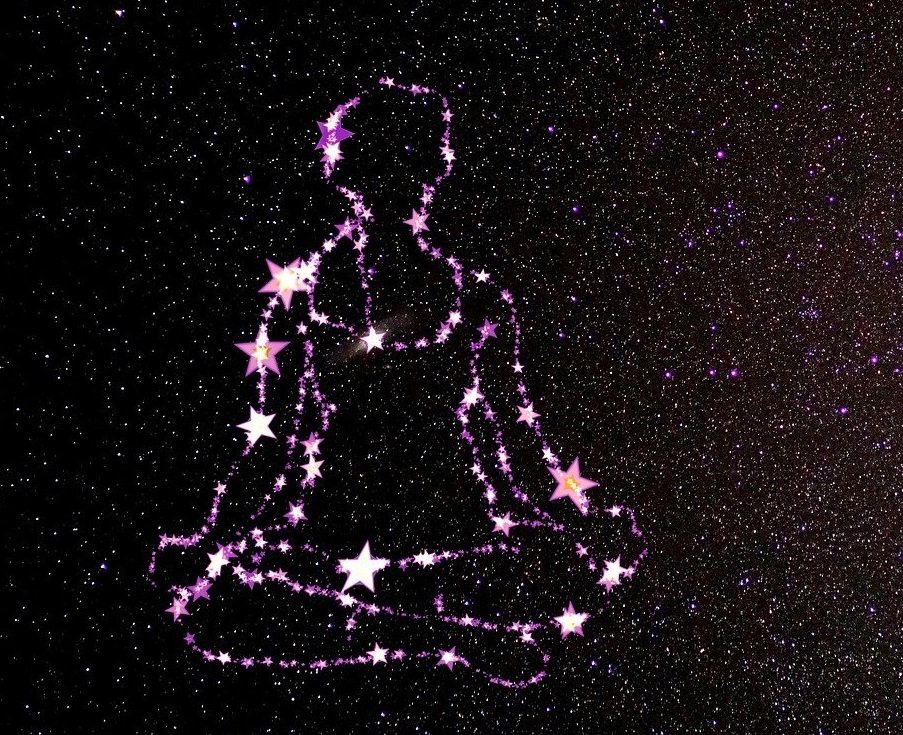
Journeying into inner space, the ultimate frontier where explorers of the mind venture into a realm unfamiliar to most, yet a realm that has served as the training ground for countless mystics and meditators throughout history.
The realm of modern science excels in unraveling the mysteries of tangible things. The laws of physics meticulously detail the behaviors of chemicals, cells, and the workings of matter and energy.
However, as science delves deeper into the essence of matter and energy, it encounters vast expanses of space rather than solid building blocks as anticipated. The enigmatic world of subatomic particles, constituting everything around us, is revealed to be predominantly composed of immense dimensions of space.
Renowned scientist Carl Sagan once remarked, “Atoms are mainly empty space. Matter is composed chiefly of nothing.” Expanding on this notion, a contemporary writer and scientist contextualized it by stating:
“An atom is mostly made up of empty space. If you remove the empty space from every atom, the entire world’s human population could fit inside a sugar cube.”
Is space truly empty? Science writer Mike Mcrae suggests otherwise, asserting that
“what we take for the complete absence of matter and radiation is an infinite field of possibility from which particles emerge.”
Mystics, on the other hand, propose that the invisible, non-material aspect of the universe is far from empty; instead, it brims with intelligence, consciousness, and unmanifest potential.
Inner Space: Inextricably Linked to Awareness
The focus here is on inner space, inseparable from a conscious presence. Modern science has long strived to eliminate the subjective conscious element from the material world, relying solely on objective measurements and disregarding anything psychological or spiritual without a tangible basis. This approach, while a significant achievement, may overlook crucial aspects of the complete picture.
Eastern yogis and spiritual visionaries like the Buddha directly experienced the void. The Buddha termed it Sunyata, considering it the ultimate reality. Both preceding and succeeding the Buddha, others have also delved into a world where mental contents are stilled, revealing an expanse of vast space. Yet, the conscious presence intertwined with the void remains unaltered.
The wisdom traditions I adhere to, rooted in Tibetan Buddhism, define the ultimate reality as a direct understanding of the inseparability of voidness and awareness. They often equate awareness to the essence of existence, indivisible from the nature of emptiness. Just as wetness is inherent in water, awareness and the void coexist harmoniously.
The ancient Vedic texts refer to this ultimate truth as Sat-Chit-Ananda. Sat signifies existence or being, Chit denotes consciousness, and Ananda embodies bliss.

Inner Space: The Foundation of Being
Our being mirrors the expansive nature of the sky, serving as the bedrock of our existence, unchanging and unwavering amidst all experiences.
This foundation constitutes your true identity, transcending the transient conditions of the body and mind. Meditation guide Pema Chodron aptly articulates this concept, stating,
“You are the sky, everything else is just the passing weather.”
Tapping into this inner space grants a profound sense of openness and liberation, offering insights into your authentic self. As one meditation instructor posits, “enlightenment shatters the ego’s illusions,” or as a Zen master phrases it: “enlightenment is not a state of being but continuous enlightened actions.”
These teachings underscore the absence of a central self or independent entity defining you.
Your true essence manifests when liberated from a constrained self-perception, awakening to your boundless dimension of space-like awareness.
As per the Vedas: true self-realization emerges from discerning what you are not, unveiling the realization of your authentic essence. It emphatically states that you are neither your mind nor your body. The answer lies beyond tangible existence, in the realm of inner space.

Inner Space: Liberation from Suffering
Awareness embodies your essence, while inner space reflects your intrinsic nature. Recognizing that you are observing your thoughts, physical sensations, and emotions unveils that you are not those elements; instead, you are the common witness underlying them all.
Through meditation, one can detach to become the silent observer, a pivotal stage exemplified in mindfulness practices. Yet, it’s easy to retain a sense of being an ego watching events unfold like a camera. The key lies in redirecting attention inward to explore the nature of the observer.
This transcends mindfulness, leading to a profound insight into your authentic self. It’s not merely a focused beam of attention; rather, it resembles boundless space that can intentionally focus on individual aspects.
The timeless quality of this experience stems from its boundless, space-like essence. Unlike tangible entities governed by time, this space-like nature remains constant, unchanged, and eternal. Devoid of form, it operates beyond the confines of time.
This experience, witnessed by many throughout history, exudes peace and joy, free from the constraints of time-induced stress. It embodies complete freedom, openness, and tranquility.
Transcending the cycles of birth and death, it surpasses suffering, offering the fulfillment of human potential in its entirety.
Within the vast expanse of inner space, all experiences transiently pass by. The sky remains untarnished by the weather; it simply assumes momentary hues. The space-like essence naturally accommodates and embraces passing experiences without resistance or stress, offering a taste of genuine peace and joy.
Authored By Chad Foreman
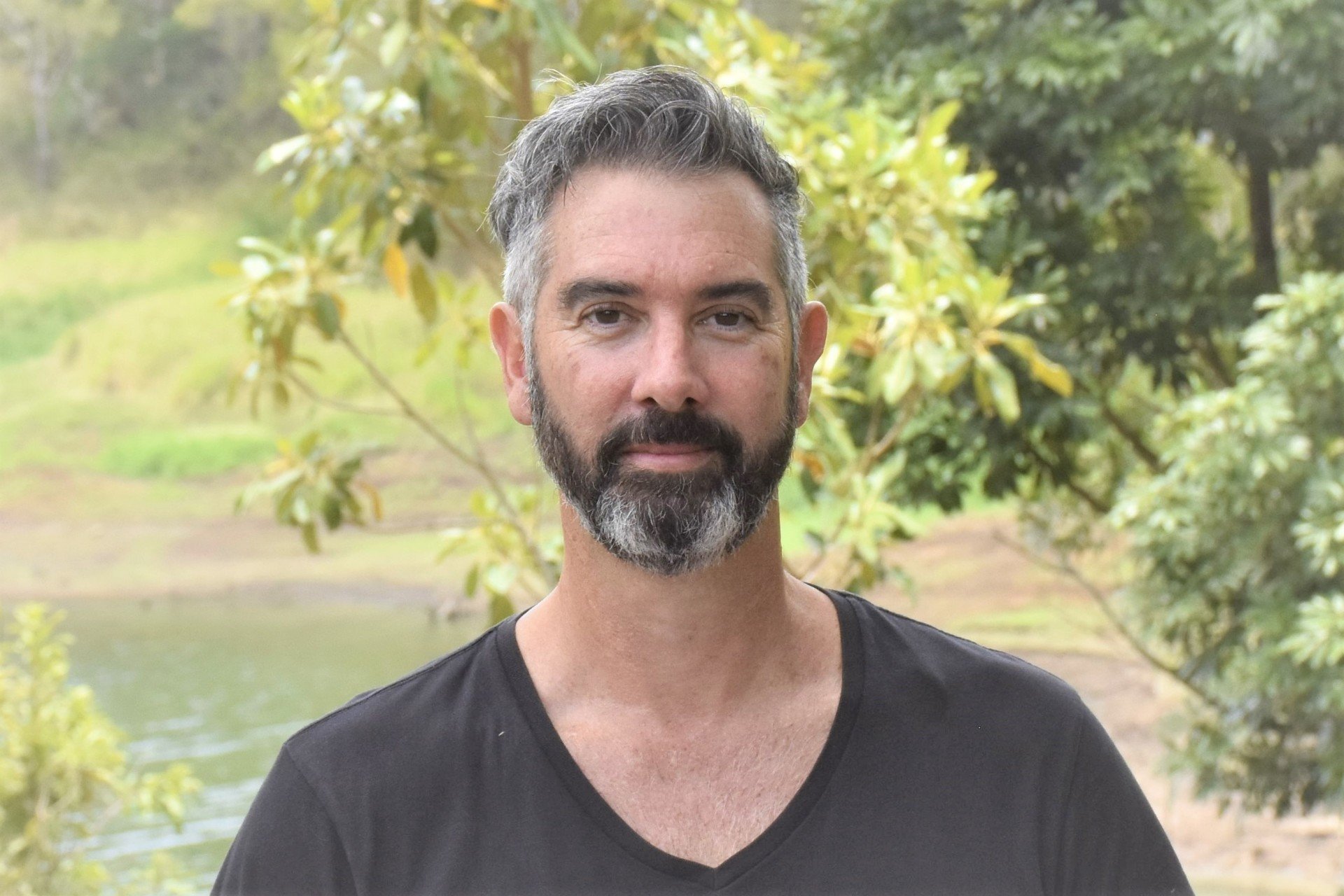
Chad, the visionary behind The Way of Meditation, has been imparting meditation teachings since 2003, intent on integrating authentic meditation practices into the lives of millions in the modern era. A former Buddhist monk, Chad dedicated 6 years to intensive meditation practice in seclusion. Presently, Chad offers
Private Online Meditation Coaching
and has curated an exceptional program titled
The 21 Day Meditation Challenge
to guide individuals from mindfulness basics to profound awareness gradually.
Discovering Inner Space
is an excerpt from Day 12 of the 21 Day Meditation Challenge.
Discovering Inner Space
Guided Meditation By Chad Foreman (20min)