Embracing the Natural State
The state of effortless meditation, also known as non-meditation, is rooted in non-dual traditions like Tibetan Dzogchen and Mahamudra, Japanese Zen, Chinese Chan, and Indian non-dual traditions like Shaivism and Advaita. The core belief in these traditions is that we are inherently whole and complete, never separate from our true essence.
Understanding this perspective is crucial. The third patriarch of Zen, Master Seng-Tsan, wrote a classic text called “Faith In The Original Mind.” While meditation is often seen as a practice beyond faith, in effortless meditation, having faith in our inherently perfect nature is essential in the initial stages. It transitions from faith to direct experience, leading to knowledge and self-awareness.
The primary goal of meditation is to directly experience what the teachers are guiding us towards. As such, one-line instructions have been included at the end of each foundation to encourage you to
give it a try and witness it for yourself.
In the natural state of meditation, the practitioner connects with something beyond the confines of the mind. Zen master Bankei referred to it as the “Unborn Mind” because it is eternal and ever-present. Effortless meditation involves resting in a pre-existing state of perfection and wholeness, not creating it through practice but rather discovering it.
The Six Foundations
1. Letting Go
Letting go means that the natural state of meditation cannot be grasped or understood through concepts. It’s a paradox discussing this topic with words and concepts. Hence, teachings like this are often termed as pointing out instructions, where teachers point towards something for you to experience firsthand rather than getting entangled in the concepts. It’s an experience that goes beyond the mind, a direct and unfiltered experience. Some refer to it as
naked awareness
, an awareness free from judgments and mental constructs.
Letting go is facilitated in meditation by continuously releasing thoughts and refraining from clinging to them. It’s not the thoughts themselves that pose a problem, but the attachment to them that leads to suffering. Hence, a deeper surrender is necessary, accompanied by profound relaxation and openness to the entirety of the present experience.
It’s crucial to note that letting go also entails not holding onto notions of the ‘right way’ or the ‘wrong way’. This might seem challenging, but the essence lies in complete openness to the unfolding experience without internal commentary.
The wisdom of the natural state cuts through illusions, revealing reality as it truly is.
Any attempt to grasp the natural state with the thinking mind not only fails but also becomes a hindrance to resting in that state. When the mind claims “I’ve understood it,” it signifies a lack of true understanding. It boils down to what the Tao Te Ching states in its opening line,
“the Tao that can be spoken is not the eternal Tao.”
INSTRUCTION:
Allow thoughts to pass by without attaching them to your experience.
Serenity serves as a significant pointing out instruction and one of the most direct methods. In the natural state of meditation, the only directive is to sit still. While this may not be mandatory, for the sake of practicing this form of meditation, sitting still proves immensely beneficial and forms a fundamental aspect of meditation training.
Meditators often encounter the metaphor of the “monkey mind,” a mind that incessantly jumps from one thought to another. Our inclination towards movement is deeply ingrained, making the emphasis on stillness a way to access peace, the absence of motion.
All impermanent things are in motion, but the focus lies on that which transcends creation and destruction, something not an object or entity to concentrate on. The natural state of meditation surpasses our conventional notions of time and space. It’s been described as primordial in Dzogchen, eternal in some traditions, and as
“the essence of nowness”
by a Tibetan master.
As modern spiritual teacher Adyashanti underscores, the natural state, or what he terms as pure meditation, isn’t a ‘state’ at all. Any emerging experience during meditation isn’t it. Anything changing or in motion isn’t it. In Vedic meditation, the practice of
‘neti neti’
, meaning
not this, not that
, signifies that any object of awareness isn’t it because it’s incomplete or partial.
Echoing Eckhart Tolle, “Wisdom arises from stillness. Simply observe and listen. Nothing more is required. Allowing stillness to guide your words and actions.”
INSTRUCTION:
Sit calmly and dwell in the unmoving awareness of the present moment.
This pivotal aspect swiftly connects you with the natural state of meditation. It’s crucial to understand that meditation doesn’t create this state but rather aids in its revelation, underscoring why it’s termed non-meditation, not a technique to yield specific outcomes.
Natural flow signifies relinquishing attempts to manipulate your experience. It’s labeled as natural because it exists inherently, not fabricated through effort.
This entails refraining from any effort to generate or induce a particular mental state or emotion. It implies allowing things to unfold without interference, letting thoughts pass without intervention.
Non-fabrication also entails avoiding attachment to pleasant, relaxing, or mystical experiences in meditation. The inclination to recreate exceptional meditation moments can pose a significant hurdle, especially for seasoned meditators.
This aligns with being aimless or goal-less, refraining from striving for specific outcomes. It’s about being present without a defined objective, simply being.
In Zen, the central practice of Zazen, often translated as ‘just sitting,’ embodies non-fabricated sitting. The emphasis lies on the ‘just.’ There’s nothing else to do in meditation apart from simply sitting.
INSTRUCTION:
Just sit without attempting to create a particular experience.
In addition to refraining from crafting experiences during meditation, there’s no need to resist anything either. Embracing non-resistance serves as a potent technique to release stress and align with the present moment. Eckhart Tolle goes as far as stating,
Non-resistance is the key to the greatest power in the universe.
Non-resistance mirrors acceptance, particularly beneficial when dealing with challenging emotions and thoughts. The instinct to combat and eliminate them is common, yet allowing and accepting these difficult aspects diminishes their control and provides space for them to dissipate.
Resisting thoughts and emotions exacerbates the situation, amplifying the suffering experienced. For instance, getting upset about being upset, or feeling melancholic about being sad, only intensifies the emotional turmoil.
The adage “what you resist persists” holds true. Stress, anger, anxiety, and even depression stem from desiring the present moment to be different. By embracing the moment as it is, without resistance, one can alleviate the struggle with reality and foster a sense of openness and liberation.
INSTRUCTION:
Acknowledge your current state and embrace it
as it is
without attempting to alter anything.
During a teaching session with a Tibetan meditation master emphasizing the natural state of meditation, an intellectually stimulating question related to Buddhist paths of purification and karma was posed. The response, however, was a simple reference to the Beatles song
“let it be, let it be”
, signifying the essence of being a simple meditator rather than a scholar. The beauty lies in the freedom of not needing to know everything, explain concepts in intricate terms, or engage in scientific discourse. The joy of not knowing and just being is found in the simplicity of the natural state.
Embracing simplicity offers immense liberation. It’s about approaching life with humility and openness, enabling innate intelligence to shine forth. This return to simplicity fosters a childlike, natural joy, embodying living in the breath instead of being ensnared by a constantly agitated, problem-solving mind.
Simplicity isn’t about ignorance but humility. It’s not about evading challenges but facing life with gentleness and openness, allowing our inherent wisdom to radiate.
Great minds like Einstein acknowledged that breakthroughs didn’t arise while deeply pondering a problem but rather in moments of relaxation and mental quietude.
INSTRUCTION
: Focus on your breath instead of getting lost in your thoughts, leading you to abide in the simplicity of just being.
There’s an awareness to behold, something to acknowledge. It eludes mental grasp, remains immovable, uncreated, unproduced through resistance, and is so simple that acceptance becomes a challenge.
Self-awareness stands as the cornerstone often overlooked in meditation guidance. It pertains to the self-radiance of non-dual awareness, where the source of light illuminates itself rather than one entity observing another.
Self-illuminated awareness is effortless. It’s not about igniting a light during meditation but recognizing the eternal brightness within, unobscured by mental shadows, allowing the light to illuminate all facets of experience.
It resembles a lamp that not only brightens the room but also reveals itself in the process. There are not two distinct lights.
As Dzogchen master Lama Surya Das articulates, the natural state of meditation entails
“bringing your entire being into complete, unified presence.”
While conventional mindfulness practices heighten awareness of surroundings and actions, the natural state of meditation deepens self-awareness in the profoundest sense.
INSTRUCTION:
Notice yourself as boundless awareness without divisions and dwell in the entirety of that existence.
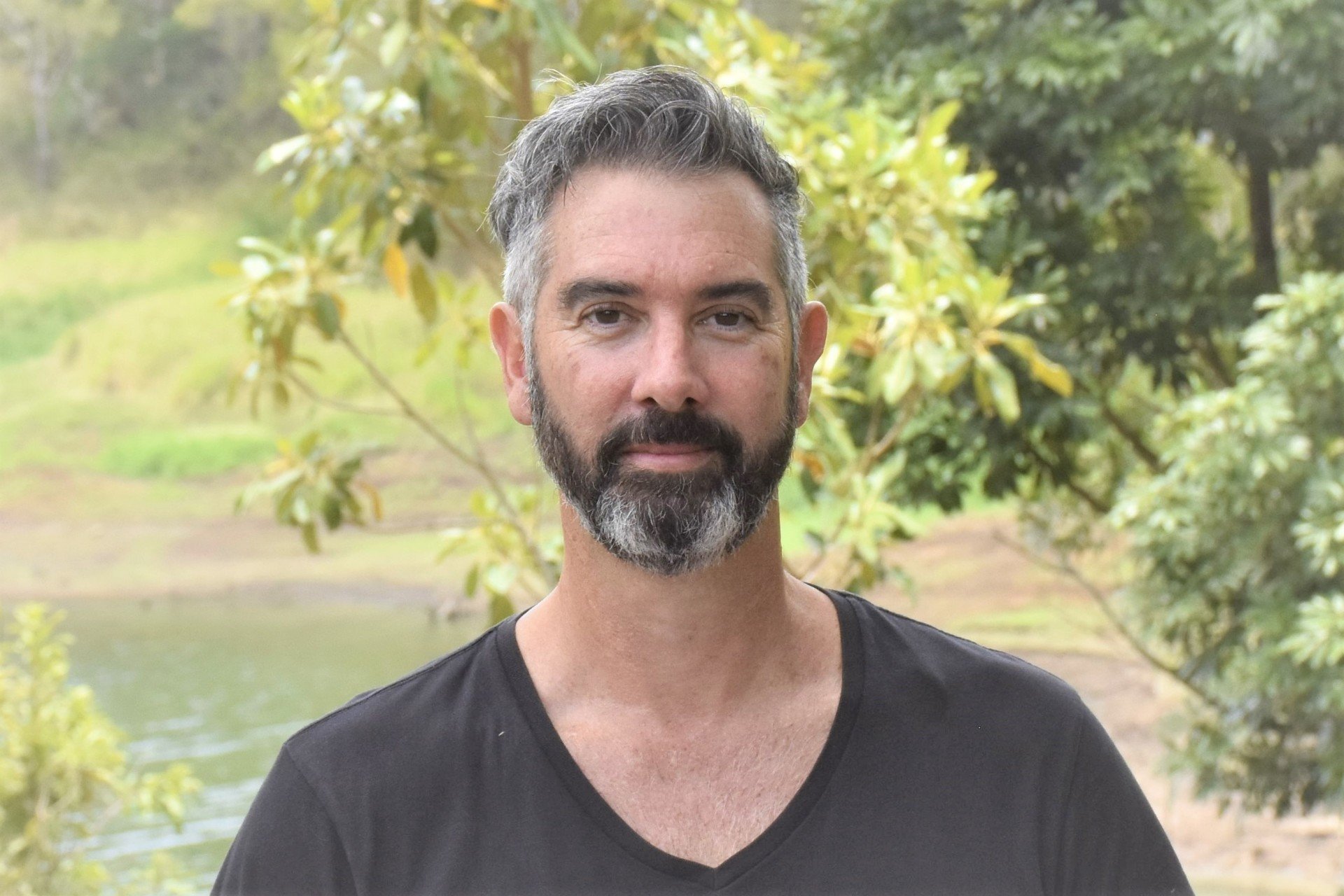
Authored By Chad Foreman
Chad Foreman, the mastermind behind The Way of Meditation, has been imparting meditation wisdom since 2003, aiming to bring genuine meditation practices to the modern populace. A former Buddhist monk with six years spent delving into meditation full-time, Chad boasts over two decades of meditation teaching experience. He conducts regular
Meditation Retreats
, offers
Online Meditation Coaching
, and presents three online programs –
The 21 Day Meditation Challenge
,
Breath-work
, and
The Bliss of Inner Fire
, catering to various meditation needs. Chad also offers a free e-book,
Insights Along the Way
.