
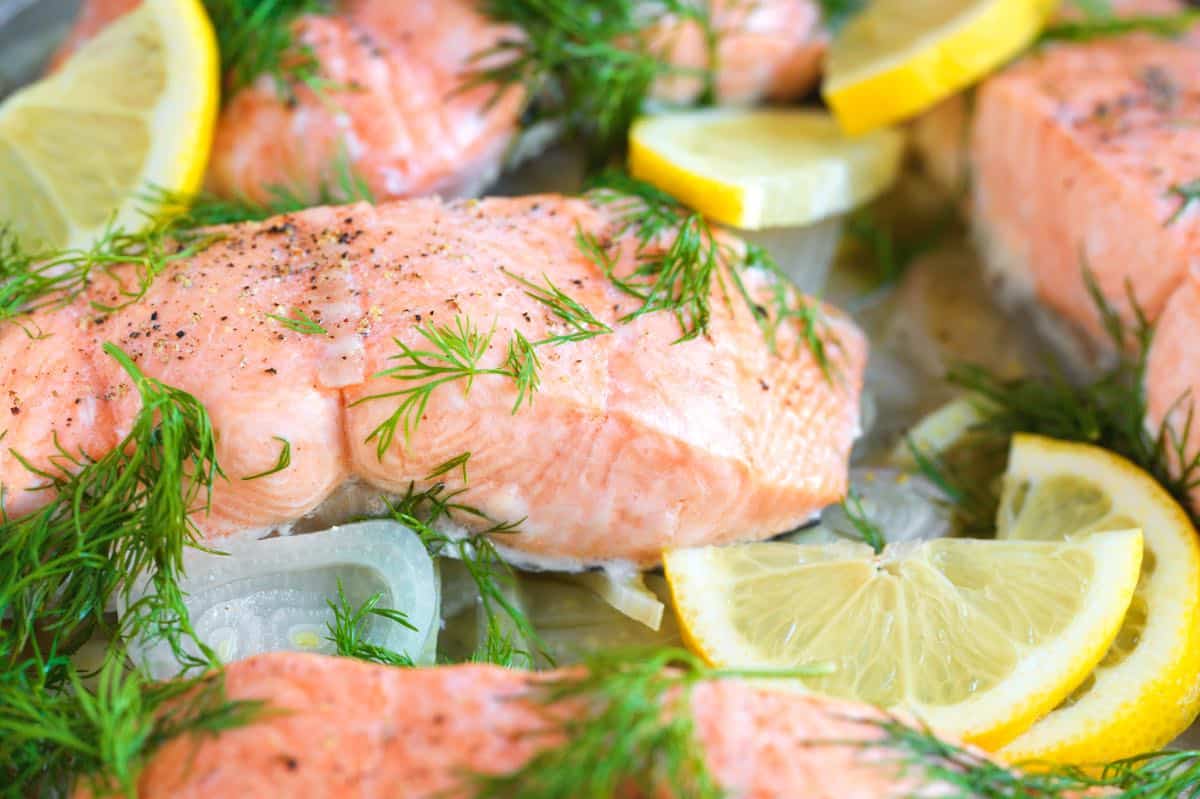
This poached salmon recipe produces some of the most tender, mouth-watering salmon you’ll ever taste. And the best part? It’s incredibly easy to make!
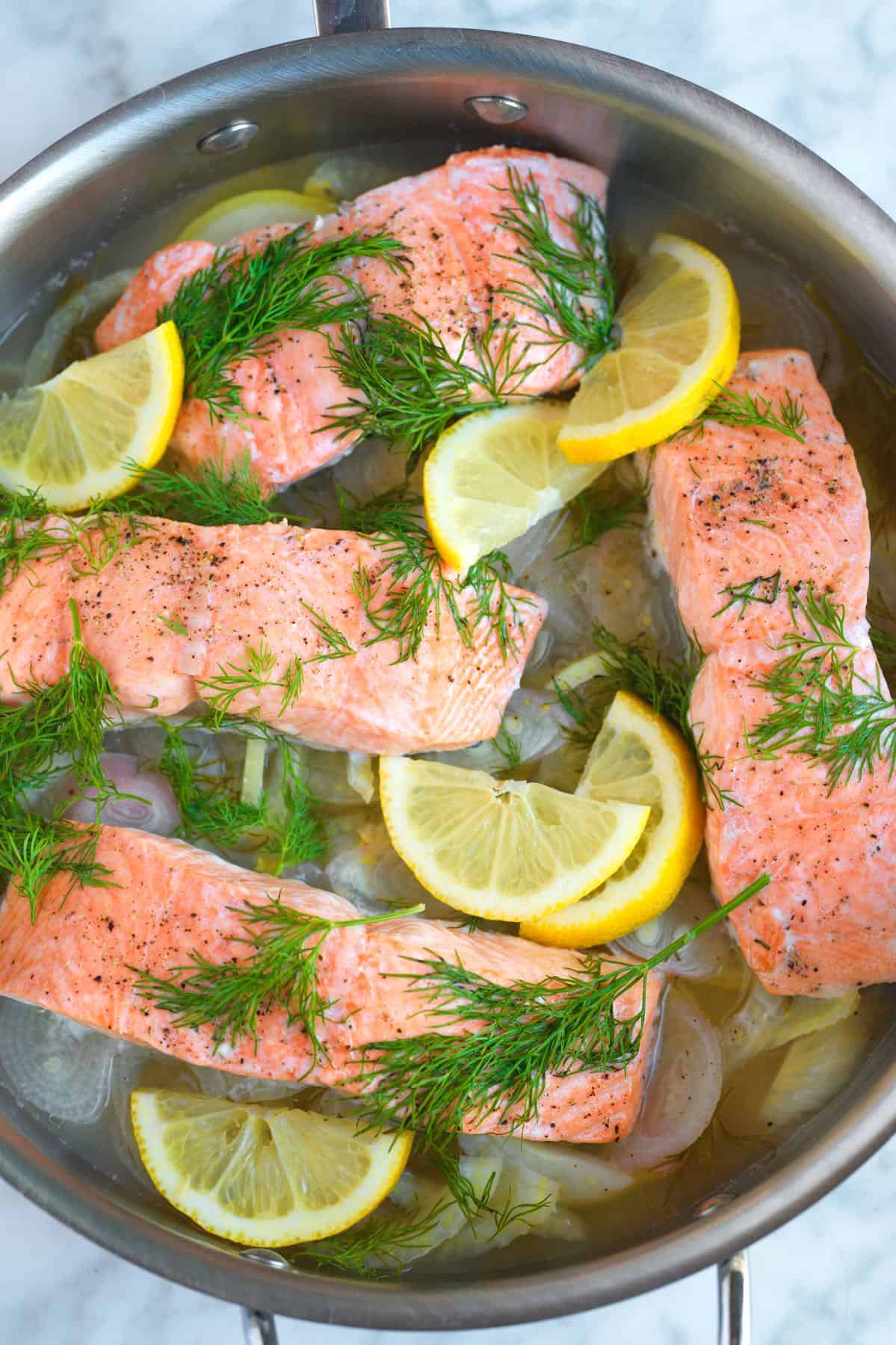
Poaching is truly one of the best ways to cook salmon. Once you try this recipe, I’m certain you’ll be just as obsessed as I am. And while we’re on the topic, I also adore poached chicken and shrimp!
This salmon comes out incredibly moist, tender, and not at all fishy. It’s perfect for topping salads, flaking over toast, pairing with creamy polenta or grits, or serving with vegetables like roasted broccolini. It’s also delicious with a dollop of hollandaise sauce or dill sauce.
Key Ingredients
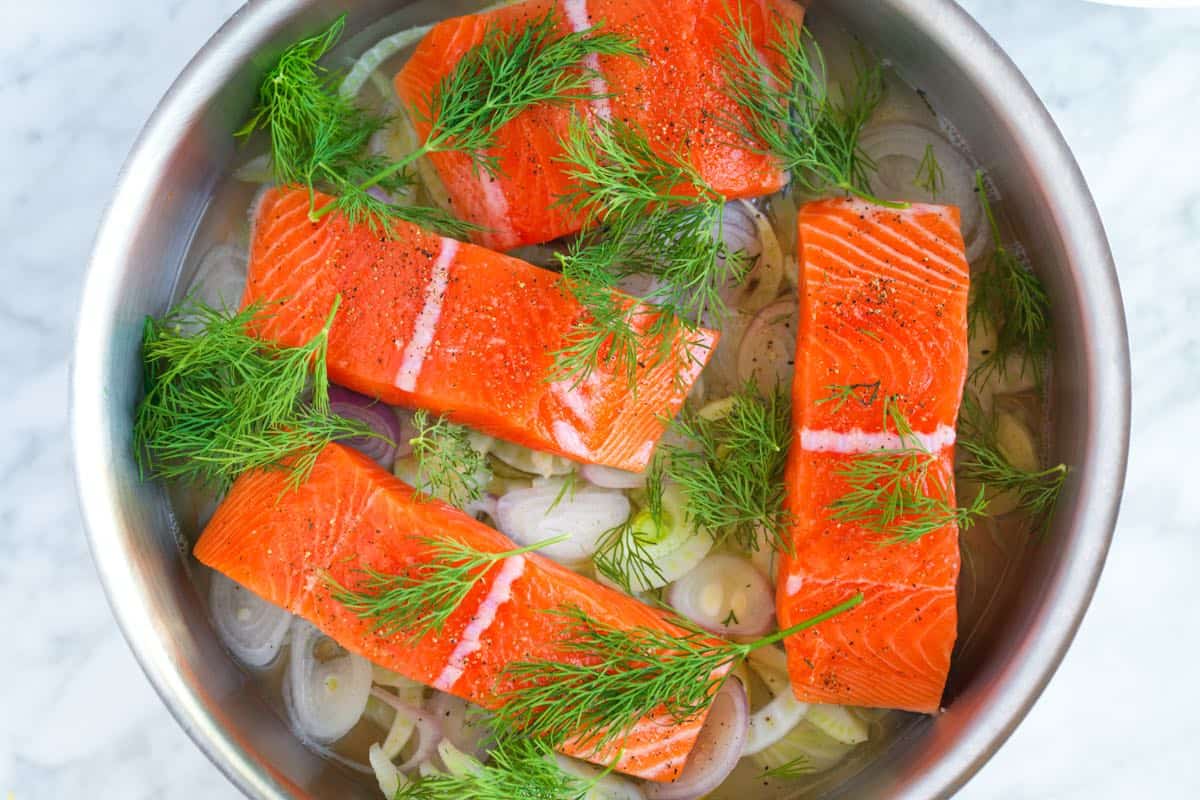
- Salmon: I recommend using salmon fillets that are around 1 inch thick (thicker fillets stay more tender and succulent). Fattier varieties like King, Coho, and Sockeye work well. Steelhead is also a great option for this recipe (similar to Atlantic salmon).
- Wine or Broth: I use a combination of wine and water in this recipe. A splash of white wine adds a nice flavor. If you don’t have wine, broth is a tasty substitute. Vegetable or chicken broth work well, and seafood stock is even better.
- Lemon: Sliced lemon is the classic choice for poaching salmon. For a fun twist, try using limes or oranges.
- Shallot: I prefer using shallots over onions for poaching. Their gentle sweetness pairs well with the salmon. Smashed garlic cloves or sliced sweet onions are good alternatives.
- Fennel: Fresh fennel is my favorite aromatic for salmon! It adds a lovely licorice flavor. Consider trying our fennel and apple salad for an extra touch of flavor.
- Fresh dill: Dill and salmon are a perfect match! I like to add plenty of fresh dill to the pan. Thyme, bay leaf, mint, and parsley are also great herb options.
Find the full recipe with measurements below.
How to Poach Salmon
Tip 1: Keep the skin on. Keeping the skin on the salmon fillets makes it easier to remove after cooking and acts as a barrier to prevent overcooking.

Tip 2: Use a skillet with a lid. You’ll need a skillet with a lid for this recipe. The poaching liquid doesn’t need to cover the salmon. The lid will trap moisture in the skillet and help gently cook the salmon. As the fish cooks, the aromatics will infuse their flavors into the fish.
Serving Suggestions
This poached salmon is perfect for salads. Try it on broccoli slaw, kale salad, or a classic Caesar salad. Cucumber and salmon make a great pair, so consider serving it with a creamy cucumber salad, vinegar cucumber salad, or avocado and cucumber salad.
It also works wonders in sandwiches and wraps.
Try using leftover poached salmon in our salmon patties recipe for a delicious twist! Don’t forget to pair it with homemade pita, salad greens, and a drizzle of Tzatziki sauce for a complete meal. Check out our Perfect Poached Salmon recipe for a quick and easy way to cook salmon with delicious flavors like lemon, shallot, fennel, and dill. Enjoy this light seafood dish with a total cooking time of just 15 minutes. Adam and Joanne Gallagher, the creators of Inspired Taste, provide the following tips and instructions for serving salmon. To store the salmon, place it in an airtight container in the fridge for up to 4 days or freeze it for up to 1 month. Thaw it in the refrigerator overnight before reheating. To reheat, place the salmon in an oven-safe dish, add a splash of water or broth for moisture, cover with aluminum foil, and bake for about 15 minutes until the internal temperature reaches 125°F to 130°F. Other tips include keeping the skin on fillets for easier removal after cooking, ensuring the poaching liquid covers a quarter of the salmon fillet, seasoning with salt and pepper, and using a favorite seafood rub if desired. The nutrition facts per serving are as follows: Serving Size 1 fillet, Calories 280, Total Fat 10.1g, Saturated Fat 2.2g, Cholesterol 76.5mg, Sodium 203.6mg, Carbohydrate 2.6g, Dietary Fiber 0.8g, Total Sugars 1.1g, Protein 37.1g. The author of these tips is Joanne Gallagher.