
Published October 27, 2022 09:15AM
You experience dozens, if not hundreds, of yoga cues each time you take a class. Some are so instantly recognizable and understandable that you follow them almost without thinking. But occasionally a cue comes along that makes you pause and want to ask a bewildered, “What?!”
The following list addresses both types of yoga cues. You’ll find insights from experienced teachers on familiar cues that you might want to explore with greater awareness. Other expert explanations demystify some of the more confusing and esoteric cues. And still others debunk well-intentioned but potentially injurious cues that don’t belong in your yoga practice. And there are a couple of cues that we included simply for your amusement.
A: Adduct and abduct
You probably hear these words all the time, yet it can be tough to differentiate them from one another. Annie Carpenter, a senior yoga teacher and creator of SmartFLOW yoga, has a trick for remembering which is which. “When I hear adduction, I think of ‘adding in,’” she says. Adduction refers to movements in toward the midline of the body—for example, wrapping your arms and legs in Garudasana (Eagle Pose). Meanwhile, abduction refers to movements away from the midline, such as taking your arms out to the side in Virabhadrasana II (Warrior Pose II) and positioning your knees away from one another in that same pose.
B: Bring your biceps in line with your ears
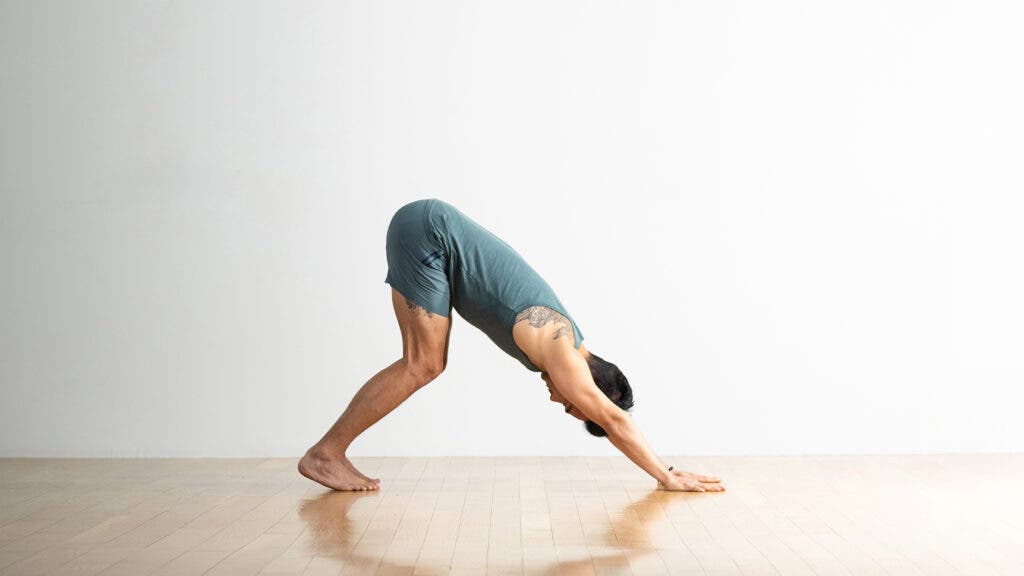
You may have heard this yoga cue in several poses, including Utkatasana (Chair Pose) and Adho Mukha Svanasana (Downward-Facing Dog Pose). While there’s nothing inherently wrong with the cue, it can lead to misalignment if not properly explained, says Kathryn Budig, yoga teacher and author of Aim True. This is especially true in Down Dog, in which you’re supporting your body weight with your upper body. “Taking your biceps to your ears can cause you to drop your head too low and collapse in your upper back,” she says. “Instead, I prefer to say to my students, ‘Keep your ears in line with your arms.’”
C: Close your eyes
If the only time you shut your eyes in your yoga practice is during seated meditation or Savasana (Corpse Pose), you’re missing out. “Closing your eyes can help you to disconnect from visual stimulation and find more stillness,” says San Francisco-based yoga teacher Laura Burkhart. Senior yoga teacher Giselle Mari adds that closing your eyes in a balance pose, such as Vrksasana (Tree Pose), challenges you to use your inner senses to find your center.
D: Draw your shoulders down your back
Alexandria Crow, yoga teacher and founder of Yoga Physics, is on a personal mission to put an end to this common cue. “When your arms go overhead, your shoulder joint itself goes up—that’s the natural movement,” says Crow. “Pulling your shoulders down while your arms are up is not only dysfunctional, it doesn’t fix the problem of people scrunching their shoulders up to their ears, which is the reason this cue took hold in the first place,” she explains. When you hear this cue, notice if you’re experiencing that scrunched posture in your neck and shoulders, but otherwise don’t worry about it.
See also Alignment Cues Decoded: “Draw Your Shoulder Blades Down”
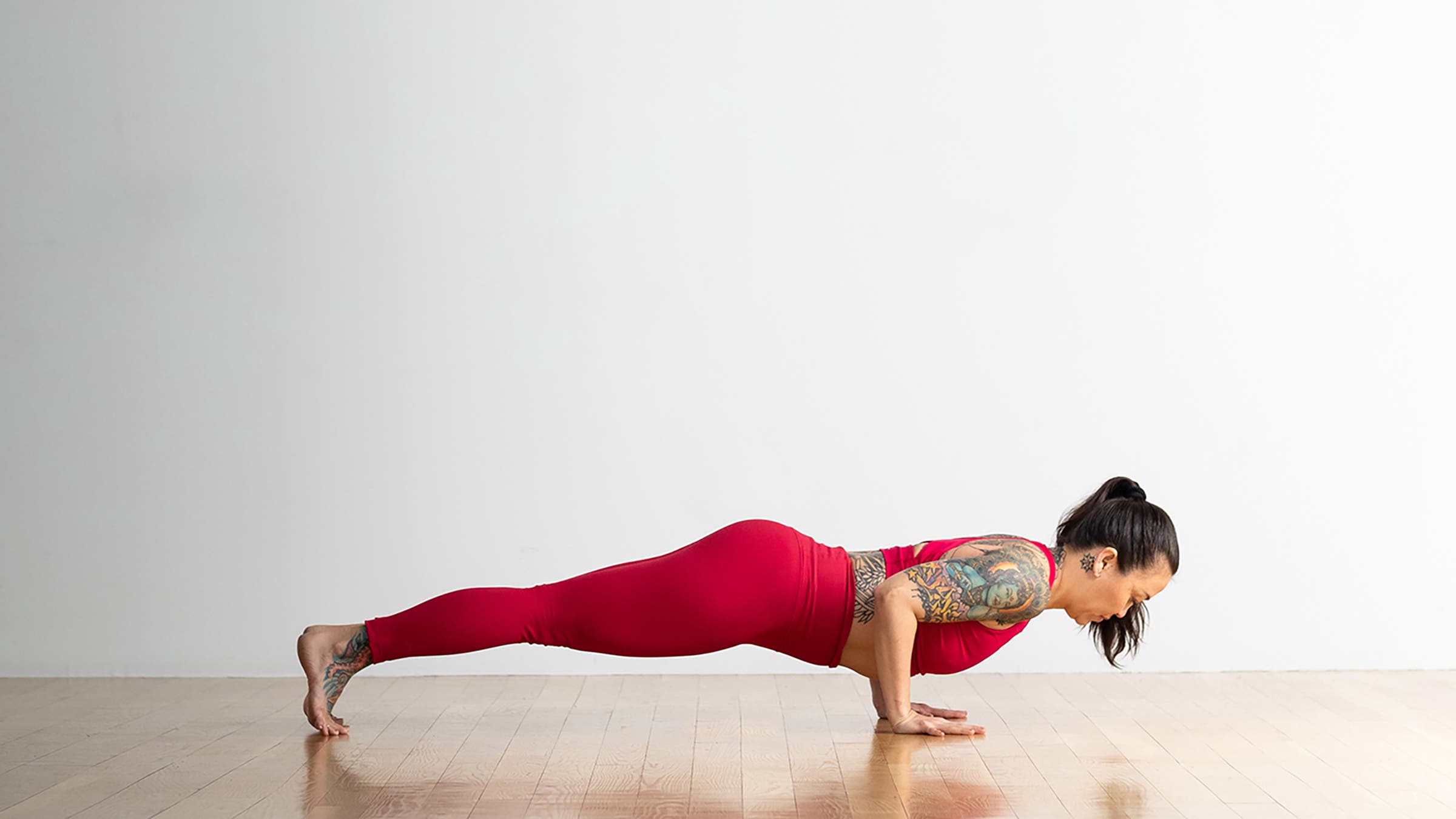
E: Hug your elbows to your sides in Chaturanga Dandasana (Four-Limbed Staff Pose)
This is one of the most vital yoga cues for Chaturanga, says yoga teacher and Yoga Journal contributing editor Jason Crandell. “It’s essential to pull your elbows into your side ribs while keeping your forearms perpendicular to the floor,” he says. This creates greater stability in the joint where your upper arm bone and shoulder blade connect. Of course, it also requires upper-body strength, so Crandell encourages his students to drop their knees if necessary to offload some weight while maintaining the integrity of the pose.
You’ll also hear this pose in Bakasana (Crow or Crane Pose), in which it similarly provides stability and the desired engagement during the arm balance.
F: Flower your anus
Admit it: When you first heard this cue (or its cousin, “blossom your buttocks”) you laughed or cringed or perhaps both. But what exactly does it mean? And why would anyone want to do it? While this cue’s origin is unclear, many teachers suggest it may be an awkward attempt at saying “widen the sit bones” or “relax the glutes.” But it doesn’t always have that effect on students. “I’m like a 4-year-old when I hear this,” says Budig. “It makes me laugh every time.” Which may, in fact, help us relax those glutes!
G: Ground down
“Ground down” sounds simple enough. But Noah Mazé, founder of Yogamazé, says grounding down involves more than pressing your feet into the floor. “It’s important to activate your pelvis, hips, and gluteus muscles to create the proper push-down action that firmly grounds the feet,” Mazé says. To do this, try to spread your weight evenly between the inner and outer edges of your feet in Tadasana (Mountain Pose), he says.
But it’s not all about activating. “Allowing your body to settle into the ground allows your skeleton to hold some of your weight, so your muscles don’t have to work as hard,” explains yoga teacher David Magone.
As per usual, it relies on finding a balance between effort and ease.
Instead, this action can restrict the range of motion and flatten the lumbar curve.
Engage Your Core: Activate the Midline
Activating your midline is crucial for strengthening your core muscles, improving balance, and fostering a sense of connection with yourself. The instruction to “zip up” serves as a reminder to tap into the energy stored in your sushumna nadi, the central channel along your spine that coordinates your entire energetic system, explains Magone. This cue is particularly effective during backbends, as gently drawing the abdominal muscles inward and upward enhances the stretch in the rectus abdominis muscles, expanding your range of motion.
Note: This article has been revised. Initially published on June 13, 2017.
Please rewrite the following sentence.