
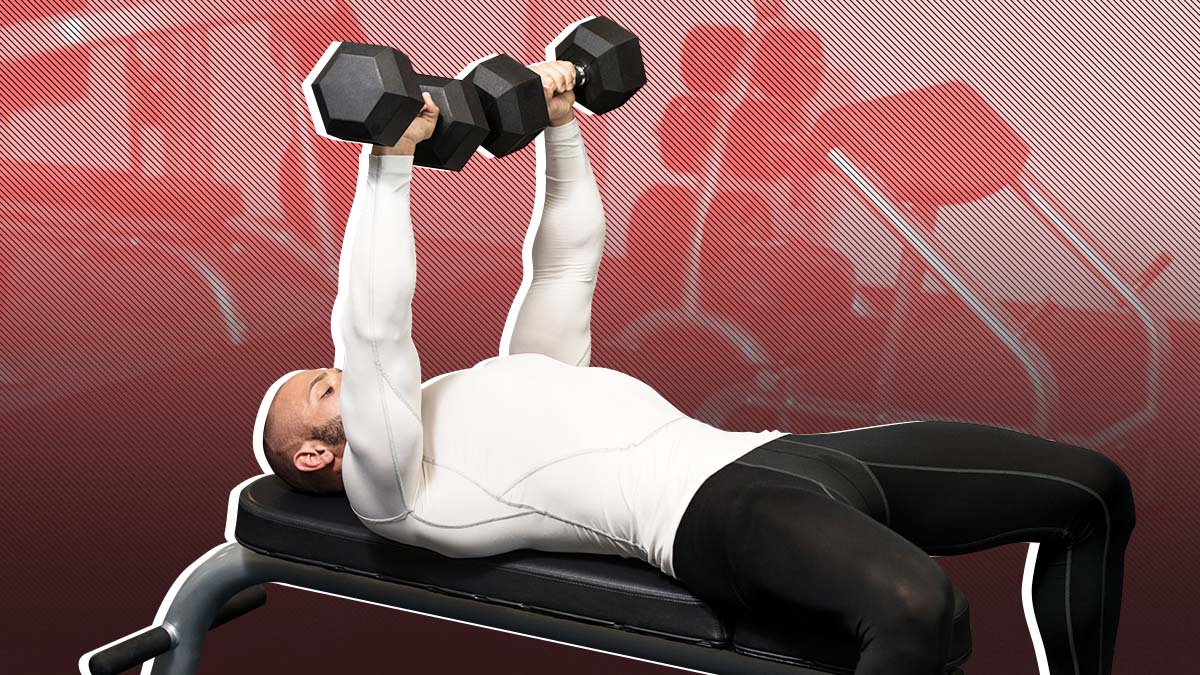
A strong and well-developed chest is a clear indicator of dedicated lifters who have put in months, if not years, of hard training. Whether it’s lifters bench pressing impressive weights, bodybuilders striking the classic “side chest” pose, or beginners mastering push-ups, chest training has always been a key focus for those looking to build muscle or test their strength.
Regardless of whether you have limited equipment at home, access to a fully equipped commercial gym, or no equipment at all, there are effective chest workouts available to help you achieve your desired results. Take a look, set your goals, and start training.
The Best Chest Workouts
Best Chest Workout With Dumbbells
Not all lifters have the luxury of training in a commercial gym, leading many to create home gyms with whatever equipment they can gather. Training at home offers unique advantages – it’s accessible 24/7, you control the music, and the dress code is entirely up to you.
The main challenge of a home gym is usually the limited space, which means prioritizing essential equipment over specialized machines. However, with a basic bench and a set of adjustable dumbbells or a few pairs of dumbbells, you can effectively train your chest with the right plan. Here’s a plan to follow.
The Dumbbell-Only Workout
This workout emphasizes exercise variety and techniques to maximize time under tension, making the most of limited equipment. Complete all sets of each exercise before moving on to the next, and perform the workout once or twice a week based on your overall training schedule.
Single-Arm Flat Dumbbell Press
- How to Do it: Lie on a flat bench as you would for a standard dumbbell bench press, but with a dumbbell in only one hand. The unilateral nature of this exercise intensifies core engagement while significantly targeting the chest.
- Sets and Reps: 3 x 6-8 per side
- Rest time: No rest between sides, with a 45-second rest between sets.
Neutral-Grip Incline Dumbbell Press
- How to Do it: Adjust the bench to an incline angle. If the bench is fixed, elevate one side with blocks or weight plates. Keep your hands facing each other rather than your feet to reduce shoulder strain and increase chest activation.
- Sets and Reps: 4 x 10-12
- Rest time: 60 seconds between sets.
Flat Dumbbell Press With Pause
- How to Do it: Perform the standard flat dumbbell bench press, pausing for two seconds in the stretched position at the bottom of each repetition.
- Sets and Reps: 3 x 8-10
- Rest time: 60 seconds between sets.
Best Bodyweight Chest Workout
Having no equipment can be a blessing in disguise, pushing you to be creative and focus on effective bodyweight exercises. While bodyweight training may be underestimated, pushing yourself with the right movements can challenge you like never before.
The Brutally Simple Bodyweight Workout
When thinking of bodyweight chest exercises, push-ups likely come to mind. This workout is straightforward – do 100 push-ups, regardless of the time it takes. Aim to complete 100 push-ups in less time during the next session. It’s a form of density training, increasing work done in less time or doing more work in the same time frame.
Remember, focus on maintaining proper form throughout. Each rep should bring your chest close to the floor (based on shoulder mobility) at the bottom and arms fully extended at the top.
Push-up
- How to Do it: Support your body on your toes and hands, with hands slightly wider than shoulder-width apart. Keep a straight line from neck to ankles, lower your body by bending your elbows, and push back up to full extension. To reduce shoulder strain, angle your elbows toward your feet rather than your shoulders.
- Sets and Reps: 100 total reps, broken down into sets until completion.
- Rest time: Rest as needed, aiming to improve completion time by at least one second with each workout.
Best Chest Workout for Muscle Mass
A muscle-building chest workout is a staple for bodybuilders. While many may dread leg day, focusing on chest day with dedication is crucial for muscle growth. This bodybuilding-style approach involves multiple exercises, various angles, pushing to muscular failure, and achieving a pump in the target muscle.
Chest Day, Best Day
This traditional bodybuilding workout can stand alone as a chest session or be combined with shoulder and tricep exercises for a “pushing muscle” day. For a complete upper body workout, consider training back before chest or alternating exercises as supersets.
Dip
- How to Do it: Start at the top position on dip bars, leaning forward to emphasize chest engagement and stretch. Lower until mobility allows, pause, and press back up.
- Sets and Reps: 3 x 8-12
- Rest time: 60 seconds between sets.
Pec-Deck With One-and-a-Half Reps
- How to Do it: Set up on a pec-deck machine with handles below shoulder height. Perform “one and a half” reps by lowering to full stretch, raising to full contraction, lowering halfway, raising to full contraction, and then lowering fully for one complete rep.
- Sets and Reps: 4 x 8-10
- Rest time: No rest before moving to the next exercise.
Flat Barbell Bench Press
- How to Do it: Take a wide grip and lower the bar to mid-chest. Press upwards, maintaining proper form and using an appropriate weight to account for pre-fatigued chest muscles.
- Sets and Reps: 4 x 8-12
- Rest time: 90 seconds before returning to the previous exercise.
Smith Machine Incline Press
- How to Do it: Position a bench at a 30 or 45-degree incline under a Smith machine. Grip the bar slightly wider than for flat bench press and perform controlled repetitions, ensuring the bar reaches at least chin level at the bottom.
- Sets and Reps: 3 x 12-15
- Rest time: 45 seconds between sets.
Best Chest Workout For Strength
The bench press is a true test of upper body pressing power, despite its reputation as an ego lift. Building a strong chest has always been a priority for dedicated lifters. Here’s a simple yet effective plan to enhance pressing strength.
The Bigger Bench Plan
A chest-focused strength workout centers around the flat barbell bench press, a classic powerlift known for moving significant weight. This once-a-week routine incorporates explosive training to improve bench press power, followed by accessory exercises to strengthen the chest and pressing muscles.
Plyometric Push-up
- How to Do it: Perform a push-up, exploding off the ground with maximum force to lift your hands briefly off the ground. Pause at the top before the next rep.
- Sets and Reps: 5 x 5
- Rest time: 60 seconds before moving to the next exercise.
Flat Barbell Bench Press
- How to Do it: Lower the bar to mid-chest, press up, and pause briefly at full extension before lowering under control.
- Sets and Reps: 5 x 3
- Rest time: Three minutes before returning to the first exercise.
Floor Press
- How to Do it: Lie on the floor with a barbell set in a rack above your head. Lower the bar until your elbows lightly touch the ground, pause, and press back up.
- Sets and Reps: 4 x 4-6
- Rest time: Three minutes between sets.
Dip
- How to Do it: Start at the top of dip bars, lower, pause, and press back up. Increase resistance using a weight belt or weighted vest.
- Sets and Reps: 4 x 6-8
- Rest time: Two minutes between sets.
The Chest Muscles
When designing chest workouts, it’s essential to understand the anatomy of the chest muscles for effective training. The pectoralis major, commonly known as “the chest,” consists of two heads – the sternocostal and clavicular. The sternocostal head is the primary mover in all pressing exercises, while the clavicular head (upper chest) is targeted more efficiently with inclined exercises.
Alongside the pectoralis major, the pectoralis minor and serratus anterior play crucial roles in chest exercises. While the pec minor aids in scapular movement, the serratus anterior contributes to scapular stability and movement during chest presses.
A Chest Warm-Up is Essential
Prior to any chest workout, a specific warm-up is crucial for optimal performance and injury prevention. A comprehensive warm-up not only enhances overall performance but also reduces the risk of pec tears, shoulder strains, and elbow stress that may result from inadequate preparation.
The Complete Chest Warm-Up Circuit
- Slow Push-up Plus: Perform slow push-ups, extending to reach your shoulder blades towards the ground after each rep.
- Push-up Plank Shoulder Tap: From a push-up position, alternate touching each shoulder with the opposite hand.
- Band Pull-Apart: Use a resistance band for reverse flye movements to target the shoulders and upper back.
Powerful, High-Performance Pecs
Whether your goal is to lift heavy weights, sculpt an impressive physique, or simply enjoy a challenging workout, there are ample options to train your chest effectively. Remember to follow a well-designed plan and prioritize proper form to prevent injuries and achieve optimal results.
References
- Krzysztofik, M., & Wilk, M. (2020). The Effects of Plyometric Conditioning on Post-Activation Bench Press Performance. Journal of human kinetics, 74, 99–108.
- https://doi.org/10.2478/hukin-2020-0017Ulrich G, Parstorfer M. Effects of Plyometric Versus Concentric and Eccentric Conditioning Contractions on Upper-Body Postactivation Potentiation. Int J Sports Physiol Perform. 2017 Jul;12(6):736-741. doi: 10.1123/ijspp.2016-0278. Epub 2016 Oct 13. PMID: 27736266.
- Clark, Ross A1,3; Humphries, Brendan2; Hohmann, Erik3,4; Bryant, Adam L1 The Influence of Variable Range of Motion Training on Neuromuscular Performance and Control of External Loads, Journal of Strength and Conditioning Research: March 2011 – Volume 25 – Issue 3 – p 704-711 doi: 10.1519/JSC.0b013e3181c6a0ff
- Lauver JD, Cayot TE, Scheuermann BW. Influence of bench angle on upper extremity muscular activation during bench press exercise. Eur J Sport Sci. 2016;16(3):309-16. doi: 10.1080/17461391.2015.1022605. Epub 2015 Mar 23. PMID: 25799093.
- Rodríguez-Ridao, D., Antequera-Vique, J. A., Martín-Fuentes, I., & Muyor, J. M. (2020). Effect of Five Bench Inclinations on the Electromyographic Activity of the Pectoralis Major, Anterior Deltoid, and Triceps Brachii during the Bench Press Exercise. International journal of environmental research and public health, 17(19), 7339. https://doi.org/10.3390/ijerph17197339
- Castelein B, Cagnie B, Parlevliet T, Cools A. Serratus anterior or pectoralis minor: Which muscle has the upper hand during protraction exercises? Man Ther. 2016 Apr;22:158-64. doi: 10.1016/j.math.2015.12.002. Epub 2015 Dec 22. PMID: 26749459.
Feature Image: Jasminko Ibrakovic / Shutterstock