
Utilizing the Polyvagal Theory in Meditation Practice
Understanding the Three Responses
Fight-or-flight
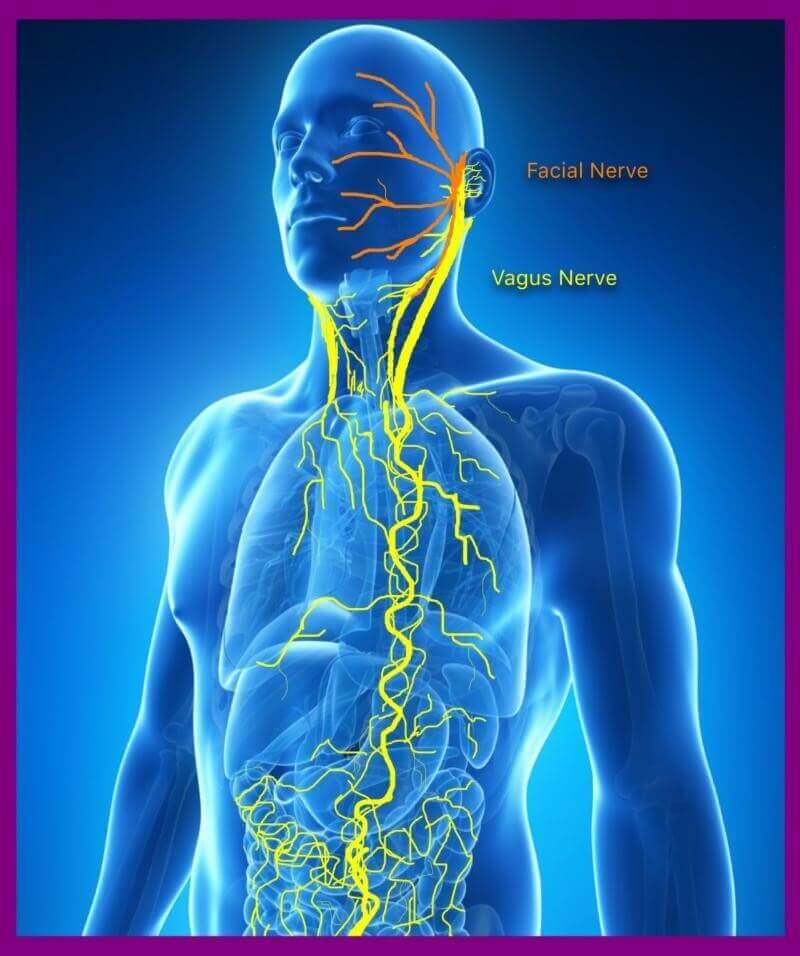
represents our sympathetic nervous system’s reaction to danger. In contrast, the relaxation response and immobilization response induce calmness through the parasympathetic nervous system, particularly the vagus nerve, consisting of dorsal and ventral parts. The dorsal component triggers shutdown during trauma (freeze response).
Stimulating the Vagus Nerve
Find a Safe Place
Connect with Others
Visualizing yourself meditating with a supportive community can also foster a sense of connection and calmness.

Relax Facial Muscles
Relaxing facial muscles can instantly induce a state of relaxation. The close connection between facial nerves and the vagus nerve can be leveraged by simply relaxing facial muscles.
Deep Breathing
Deep breathing exercises, known as breathwork, can effectively calm the system and activate deep relaxation states. The Polyvagal Theory supports the stress-reducing benefits of breathwork.
The Art of Breathing
course
Chanting Om or Humming
Chanting Om has been shown to activate the vagus nerve and induce deep relaxation. Group chanting can enhance the experience and deepen the connection to the practice.
Detach from Thoughts
Mindfulness meditation techniques can help detach from stressful thoughts, allowing the nervous system to reset to a state of ease. Practices like deep breathing and chanting can also aid in detaching from thoughts.
Written by Reese Jones
