
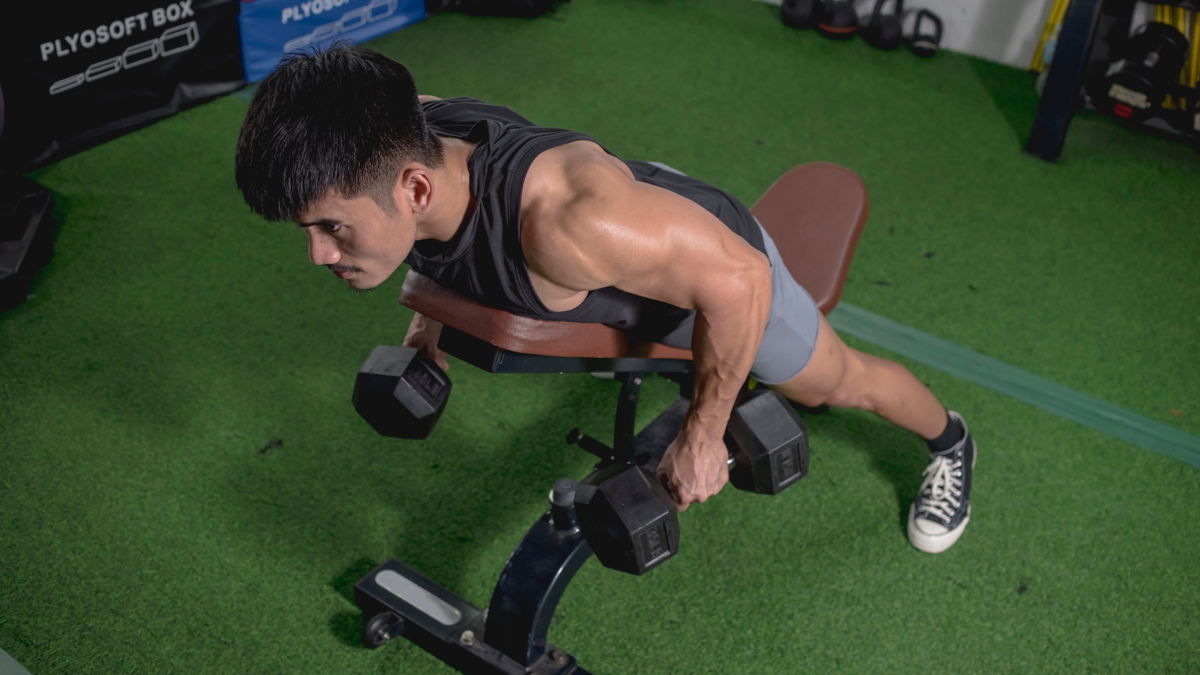
While the back may not be considered one of the “mirror muscles” that you see in your reflection like the chest, shoulders, and arms, having a well-developed back can help balance your physique. A strong back not only improves functionality but also aids performance in exercises such as the bench press, deadlift, and shoulder press.
When it comes to back training, it’s important to go beyond simply using any back machine at the gym and following a random program. For optimal results, consider incorporating these four back workouts tailored to specific needs.
The Best Back Workouts
Best Back Workout for More Muscle
To add muscle to your back, you’ll need plenty of volume and a rep range that may be different from what you’re used to. Hypertrophy training, focused on muscle growth, requires recruiting the most muscle fibers and fatiguing them to promote growth.
Unlike strength-focused training that emphasizes a few compound exercises, muscle size training involves a variety of exercise angles to develop a complete back.
The Back-Building Workout
This workout aims to add maximum muscle to your back, rather than focusing on moving the maximum amount of weight. Strict form during exercises is essential.

To engage the most muscle fibers and shift the focus from your biceps to your back, ensure each rep is performed with proper form. Concentrate on engaging your back by pulling with your elbows rather than your arms.
Wide-Grip Pull-up
- How to Do It: Grab a pull-up bar with an overhand grip just outside shoulder-width. Start with slightly bent arms and take a deep breath in. Pull your chest towards the bar by slightly arching your back. Avoid swinging your legs and lower under control.
- Sets and Reps: 30 total reps. Do as many sets as needed.
- Rest Time: Two minutes between sets.
Straight-Arm Cable Pulldown
- How to Do It: Stand in front of a high cable machine with a straight bar attached to the pulley. Grab the bar with a slightly wider than shoulder-width overhand grip. Pull the handle down towards your pelvis without bending your arms. Hold the contraction when the bar reaches your thighs, then return to the starting position slowly.
- Sets and Reps: 3 x 15
- Rest Time: One minute between sets.
Bent-Over Barbell Row
- How to Do It: Stand in front of a barbell with your feet shoulder-width apart. Bend at your hips (without rounding your back) until your upper body is almost parallel to the floor. Grab the bar with a palms-down, shoulder-width grip. Pull the weight up until it reaches near your belt-line, keeping your back flat throughout. Lower the weight down slowly and with control.
- Sets and Reps: 3 x 10-15
- Rest Time: One to two minutes between sets.
Close-Grip Pulldown
- How to Do It: Attach a narrow, parallel-grip handle to an overhead pulldown cable machine. With your hands facing each other, pull the weight straight down towards your chest. Keep your torso upright, slightly arch your back, and squeeze your shoulder blades together at the bottom position before returning to the starting position with your arms overhead.
- Sets and Reps: 3 x 10-15
- Rest Time: One minute between sets.
Best Back Workout With Dumbbells
For those who prefer working out from home or have limited gym access, a dumbbell workout can be just as effective for developing a great back. With a few pairs of dumbbells or an adjustable pair and a bench, you can create an effective back routine.
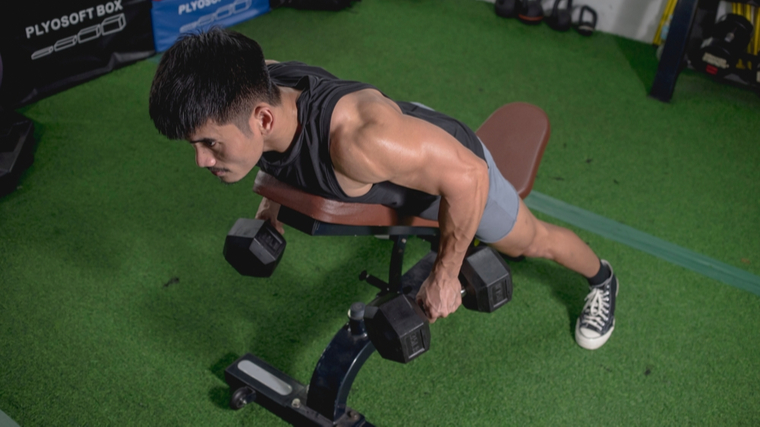
Don’t underestimate the effectiveness of an all-dumbbell workout when done correctly. Paying close attention to form and function is key to achieving results.
The Dumbbell Back Workout
You don’t need a heavy barbell, pulldown station, or row machine to train your back. An all-dumbbell workout, when done with proper form, can be just as effective as a multi-equipment program.
Cross-Bench Dumbbell Pullover
- How to Do It: Lie perpendicular on a flat bench with only your upper back touching the pad. Grasp a dumbbell with interlocked hands flat against the weight above your chest. Keep a slight bend in your arms and lower the weight in an arc backwards behind your head while breathing deeply. Reverse the motion to pull the weight upwards along the same arc while exhaling.
- Sets and Reps: 3 x 12
- Rest Time: One minute between sets.
Chest-Supported Dumbbell Row
- How to Do It: Set an adjustable bench to a low angle and lie face down with your chest on the pad. Take a pair of dumbbells with your hands facing each other and row both weights to your waist without lifting your upper body off the bench. Squeeze at the top before returning to the starting position.
- Sets and Reps: 3 x 10-15
- Rest Time: One minute between sets.
Single-Arm Dumbbell Row
- How to Do It: Grab a dumbbell with one hand, bend at the hips, and keep your feet shoulder-width apart. Place your free hand on a solid surface for support and avoid rounding your back. Pull the dumbbell towards your waistline without twisting your back. Squeeze your back at the top and lower the weight under control.
- Sets and Reps: 3 x 8-10
- Rest Time: No rest between sides.
Best Back Workout for Beginners
For beginners, it’s essential to focus on perfecting your form from the start. Avoid overly complicated programs that can lead to frustration and potential injury if the basics are not mastered.
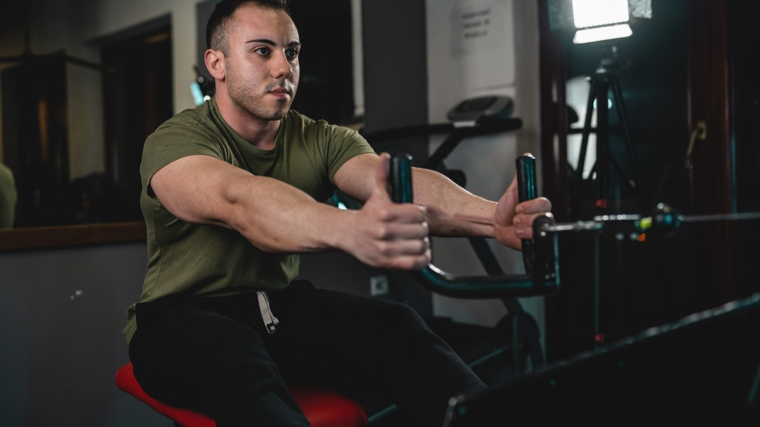
This routine focuses on basic movements for the back to build a foundation of strength.
The Back to Basics Workout
Using your bodyweight and engaging both sides of your body will help develop strength without the need for multiple machines or advanced techniques. Perform this workout twice a week for at least eight weeks before progressing to more advanced exercises.
Chin-up
- How to Do It: Grip a pull-up bar with an underhand, shoulder-width grip. Pull your body upwards, leading with your chest and keeping your elbows close to your sides. Lower yourself slowly with a slight bend in your elbows.
- Sets and Reps: 30 total reps. Do as many sets as needed.
- Rest Time: Two minutes between sets.
Two-Arm Dumbbell Row
- How to Do It: Bend at your hips until your torso is nearly parallel to the floor. Grab a pair of dumbbells with a neutral grip and pull both weights up to the sides of your abs. Focus on feeling your lats contract and lower the weights under control.
- Sets and Reps: 3 x 12
- Rest Time: One minute between sets.
Close-Grip Pulley Row
- How to Do It: Use a close-grip parallel handle on a pulley row machine. Sit with slightly bent knees, lean slightly forward, and feel a stretch in your lats. Pull the handle towards your stomach while straightening your spine and sitting upright. Squeeze your shoulder blades together in the contracted position and return the weight forward under control.
- Sets and Reps: 3 x 12
- Rest Time: One minute between sets.
Best Back Workout for Strength
Training for sheer strength requires a different approach. Focused on performance rather than appearance, strength training involves pushing more weight for more reps while maintaining proper form. Avoid heaving or cheating the weight up, as this can lead to injury.
The Workout for a Strong Back
This strength-focused workout can be done once or twice a week. It emphasizes big, multi-joint lifts to enable lifting heavier loads. However, always prioritize solid form over lifting heavier weights.

Only increase weight when you can comfortably handle the current load within the target rep range. Add weight gradually and always maintain proper form.
Weighted Wide-Grip Pull-up
- How to Do It: Perform a wide-grip pull-up with a weight belt around your waist. Focus on controlled reps without swinging your body, as improper form can strain your shoulders. Stay tight throughout each rep.
- Sets and Reps: 3 x 4-6
- Rest Time: Two to three minutes between sets.
Deadlift
- How to Do It: Place a loaded barbell on the floor and keep your back flat. Squat down to reach the bar with an overhand grip just outside your knees. Pull the bar up along your shins while maintaining a straight back and standing up. Keep the bar in contact with your thighs and avoid locking your knees at the top. Return the bar to the floor by reversing the motion.
- Sets and Reps: 5 x 4-6
- Rest Time: Three to five minutes between sets.
Pendlay Row
- How to Do It: Perform the Pendlay row similar to the bent-over barbell row, but let the bar rest on the floor between each rep for a second. This brief rest helps you maintain form and strength for each rep.
- Sets and Reps: 4 x 6-8
- Rest Time: Three minutes between sets.
Muscles of the Back
The back comprises some of the largest muscles in the body. Developing a more muscular back can significantly enhance your overall appearance and strength.

The various muscles that make up the back require multiple exercises and angles for complete development.
Latissimus Dorsi
The latissimus dorsi, or lats, are the broad muscles on both sides of your back that contribute to a wide appearance. They function to extend and rotate your upper arm during exercises like pulldowns, pull-ups, and rows. Additionally, they stabilize the lower back during fixed-arm movements like deadlifts.
Trapezius
The trapezius muscles are located on either side of your neck, running from shoulder to shoulder and partially covering your shoulder blades. They help elevate your shoulders in shrugging motions and retract them by pulling them back. When your shoulder blades are squeezed together, the lower traps are particularly activated.
Rhomboids
The rhomboid muscles, though smaller, are crucial muscles in the upper back. They connect to the shoulder blades and primarily work to retract and stabilize the shoulder blades during arm movements.
Erector Spinae
The erector spinae, also known as the spinal erectors, are a pair of muscles that run along the length of your spine. They extend the spine (bending backward) and resist spinal flexion (bending forward), helping prevent injury during exercises that load the spine.
How to Warm-Up Your Back
The back is a large muscle group that requires a thorough warm-up before starting your workout. A good warm-up not only prepares the muscles for exercise but also increases blood flow to the area.