
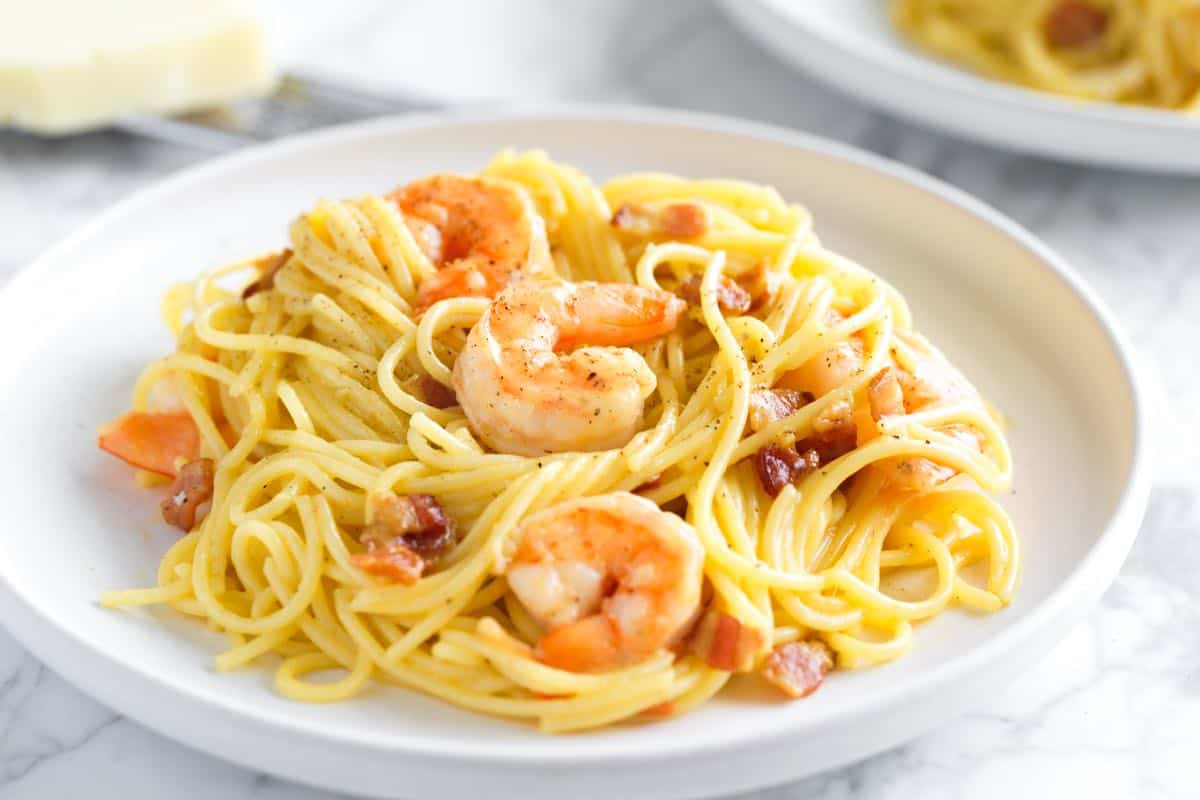
I’m excited to share this delicious shrimp carbonara recipe which features perfectly cooked shrimp tossed with spaghetti in a silky sauce.
If you are a pasta traditionalist, look away. If you love seafood pasta and don’t mind bending the rules a bit in the vein of delicious dishes, this recipe is for you! I’ve shared our pasta carbonara before. It’s simple and has the most delightful silky sauce.
We’re obsessed, and after you try it, you will be too! For this recipe, we’re using all the techniques of traditional carbonara and adding shrimp. It’s easier than you might think, which is why this works as a quick weeknight dinner. And, as a bonus, it hits all the marks for a special dinner, like, say, for date night (see more of our date night recipes).
Key Ingredients
- Shrimp: For the best results, I prefer large or jumbo shrimp. They are less likely to overcook and dry out. Look for fresh shrimp that is firm and has a slightly sweet smell. If you have frozen shrimp, thaw and drain them before using. I leave the shrimp whole before tossing it with the pasta, but if you’d prefer to have smaller bites of shrimp throughout, you can cut them into smaller pieces.
- Pork: You want a form of cured, fatty pork like guanciale (most traditional), pancetta, or thick-cut bacon (easiest to find). We will render this in a skillet, which adds flavor to our dish, and since you’ll have some rendered fat, it makes our sauce much creamier after mixing it with the eggs and cheese.
- Pasta: My go-to is spaghetti, but bucatini, which looks like spaghetti with a hole down the middle, is also lovely. If you are up for it, this recipe made with homemade pasta is incredible!
- Room Temperature Eggs: There’s no cream in this recipe. Instead, we combine egg and egg yolk with the rendered pork fat and some starchy pasta water to make the sauce silky and creamy. The eggs heat up but likely don’t hit a temperature that makes them fully cooked (similar to when making homemade tiramisu). We want a creamy, emulsified sauce, not a fully cooked scrambled egg texture. If you are concerned about raw eggs, use pasteurized eggs (they are common at most grocery stores). If you are still worried, add some shrimp to our easy fettuccine alfredo instead, which has no eggs and uses butter and cheese for the sauce. Note: If your eggs are straight from the fridge, you can warm them up quickly by adding them (in their shells) to a bowl of warm water and leaving them for a few minutes.
- Cheese: I use Parmigiano-Reggiano AND Pecorino Romano and love the combination. If you need to choose one, go with Pecorino Romano (used for authentic cacio e pepe). It’s saltier and tangier than Parmigiano-Reggiano, which works incredibly well in carbonara. For the best results, use a fine grater to grate the cheese, and skip the pre-grated parmesan, as it doesn’t melt down as well into a silky carbonara sauce. Some regions of Italy would never think to combine shrimp and cheese, but as I said above, this recipe bends the rules a bit, and honestly, your taste buds will thank you!
- Salt and Black Pepper: For perfectly seasoned pasta, you want to season your pasta water, which will season the pasta itself, and since we use some of that starchy water to bring our sauce together, it will also season the sauce. Fresh black pepper is pretty standard in carbonara, and for good reason. I like a fine grind for the pepper, use a lot of it, and love it!
Find the full recipe with measurements below.
How to Make Shrimp Carbonara
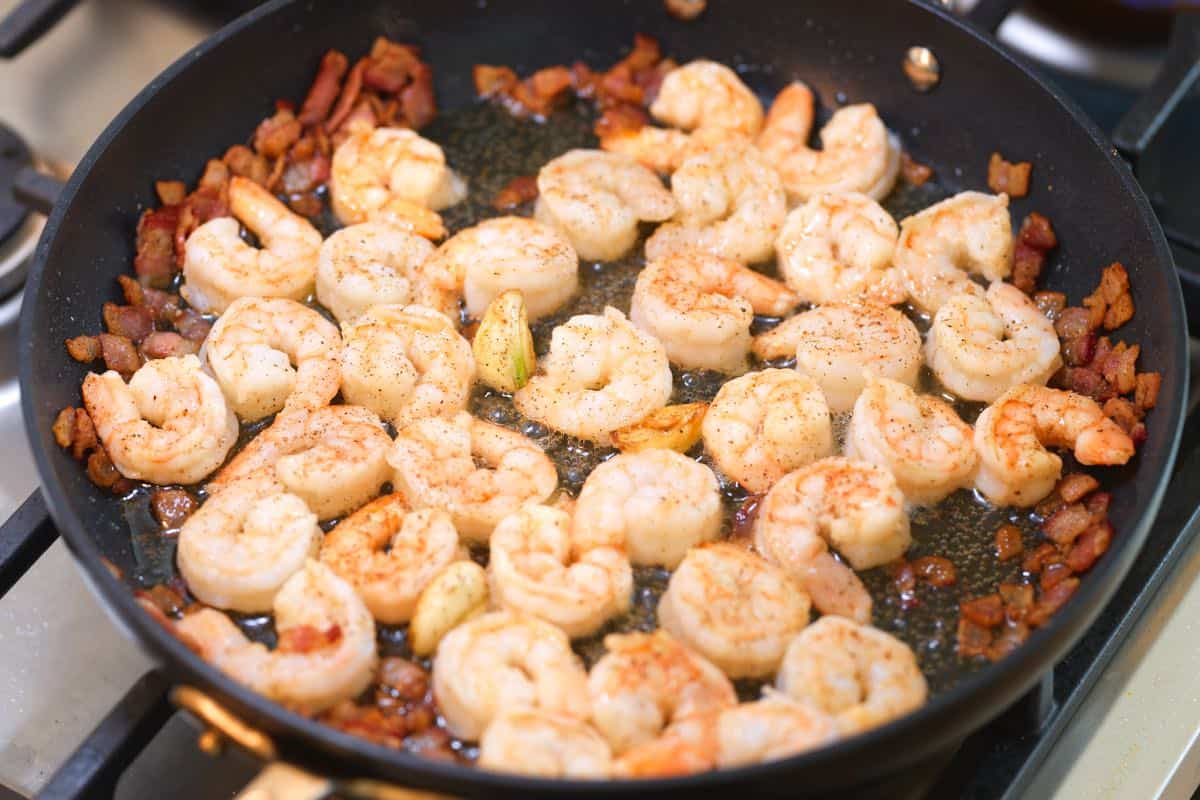
Tip 1: Render your pork. While the pasta cooks, add the pork to a skillet with halved garlic cloves, olive oil and black pepper, then cook over medium-low heat. The pork should be sizzling gently, not browning too quickly. Cook until the fat renders and the pork is still slightly chewy in the center (not crunchy/crispy).
Tip 2: Cook your shrimp in the same skillet. Next, toss in your shrimp. I like spreading them out in one layer, letting them cook for about one minute, and then flip them and cook another 30 to 60 seconds until they are tender and ever-so-slightly undercooked. Transfer the shrimp to a plate, and then move on to finishing the carbonara sauce.
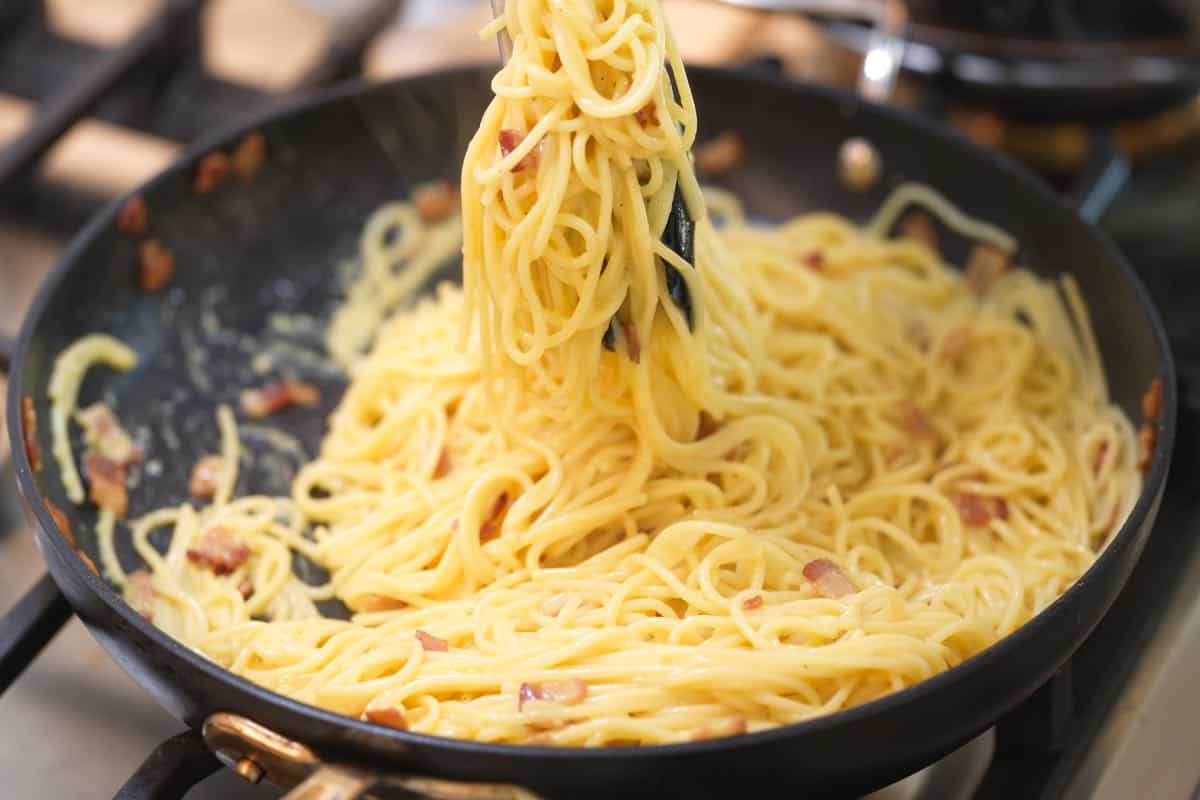
Tip 3: Toss on low heat. When the pasta is ready, use tongs to toss it into the skillet with the rendered pork and its fat. Toss well for 2 minutes. The heat should stay low, and you’ll be tossing the pasta the whole time, giving the spaghetti a chance to absorb the flavors from the pork, shrimp juices, and rendered fat. (The shrimp is still on the side on a plate, but since you cooked them in the fat, it imparts a seafood flavor to the skillet).
Tip 4: Turn off the heat. Now, turn off the heat and let the skillet sit for a minute before pouring in a whisked mixture of egg and cheese. Since the skillet sat for a minute, it won’t be so hot that it scrambles the eggs, but it will be hot enough to gently cook the eggs so they turn into that silky smooth sauce.
Tip 5: Don’t stop tossing. During this step, you want to continuously toss the pasta around the skillet since keeping things moving makes sure you create the sauce without scrambling the eggs.
As you toss the pasta, you may notice it’s a bit thick, so feel free to add a couple of tablespoons of pasta water to loosen it up as needed.
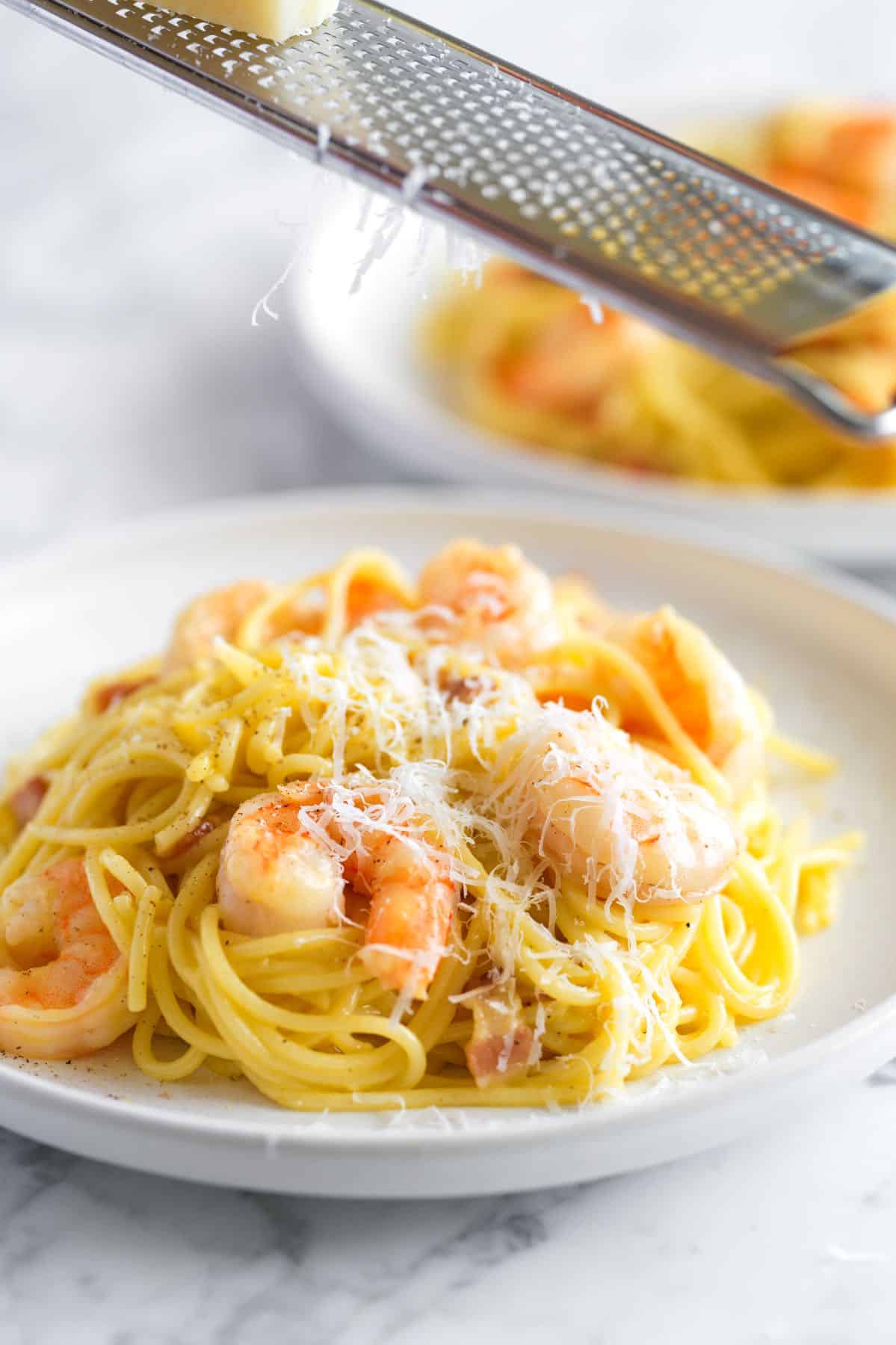
Serve the dish hot. Once you’re satisfied with the sauce, add in the shrimp and serve promptly while it’s still hot. Top it off with freshly grated cheese and some more black pepper for an extra kick. Trust us, it’s seriously delicious!
Check out more simple pasta recipes below. Set aside.
4. Cook the pork: Heat 1/2 tablespoon of olive oil in a wide skillet over medium heat. Add the bacon (or pancetta or guanciale), garlic cloves, and 1/2 teaspoon black pepper. Cook, stirring occasionally, until the fat renders and the bacon begins to crisp but still has a slight chew, 5 to 6 minutes.
5. Cook the shrimp: Add the shrimp, in one layer, to the skillet. Cook for 1 minute, flip, and cook until tender and slightly undercooked, about 1 minute. Transfer the shrimp to a plate and loosely cover with foil. Discard the garlic. Turn off the heat, and set the skillet aside until the pasta is ready. Just before the pasta is done, reheat the bacon and rendered fat in the skillet over low heat.
6. Add pasta to skillet: Do not drain the pasta water. Instead, use tongs to transfer the pasta to the skillet with bacon over low heat. Toss the pasta around the skillet for 2 minutes.
7. Create the sauce: Turn off the heat and wait one minute. Now, it’s all about keeping things moving from here. Add the egg and cheese mixture, and immediately begin tossing everything together. Add a splash of pasta water (2 to 3 tablespoons), or more as needed, to thin the sauce until a silky sauce forms. Stopping or a pan that’s too hot will cause the eggs to scramble. Keeping everything moving around will make the sauce turn silky. It takes a minute or two.
8. Taste and season with salt and additional pepper as needed. Toss in the shrimp. Divide between dishes and dust with more cheese and black pepper on top.