

I didn’t mean to fall in love again. I really didn’t. I had already given my heart to Muir Beach—the fog that tucked me in at night like a damp wool blanket, the way the ocean hurled itself at the rocks with such theatrical despair, the sense that the land itself was doing deep spiritual work and inviting me to lie down and repent for my youthful ambition. I learned Internal Family Systems in Muir Beach. I recovered from the PTSD of my medical life and hospital wounds in Muir Beach. I survived my divorce and raised my child in Muir Beach. I got mauled by a pit bull and healed without surgery, in spite of the doctors who assured me that would be impossible- in Muir Beach. Muir Beach and I had a good thing going. Muir Beach was my most intimate relationship. I was never too much for this land. I was never not enough for this bit of earth. We had vows, Muir Beach and I. Salt and mist and devotion.
I knew each season when every wildflower bloomed, and I waited with a lover’s anticipation for every new bud. I knew all the edible plants and where they grew. For a short time during the pandemic lockdown, we ate only from the land of Muir Beach, and since it was spring, that eating was bountiful, delicious and nourishing.
I knew every animal by name- the fox den under my deck and the little foxy babies, the bobcat would roamed up my driveway to catch the sunset view, the deer mama who broke her leg, who I fed for months until she disappeared one day, the coyotes who sang their howling music, the migrating whales that breached and splashed, the seals that teased my goldendoodle Moose, like little sea puppies who could dive away right as Moose got close.
Because it was also paired with my daughter leaving the nest, my housemate of fifteen years moving back to family on the East Coast, and my Baby Daddy moving to Portugal after living next door for over a decade, I grieved the loss of this place, which took the heat for all the other losses and held me as I wept and howled like the coyotes and planted my tears on Stinson Beach, with a dozen roses thrown into the sea.
So when I moved north and found myself feeling things for West Sonoma County—Bodega Bay, Sebastopol, Graton, Forestville, Healdsburg—I told myself it was just a phase, a rebound, a flirtation, a scenic distraction while I grieved what I’d lost. Nothing serious, really.
But then one morning I woke up in the 1870’s Art Barn where I now live- and I felt it: that illicit flutter, that soft animal happiness, that sense of being seen by land that wasn’t supposed to know me yet. This is how affairs begin. Not with lust, but with relief.
West Sonoma County doesn’t throw itself at you the way Muir Beach does. It doesn’t say, “LOOK AT ME, I AM SUBLIME AND YOU ARE TINY.” Instead, it says, “Have some coffee. Sit down. We’ll get to the mystery after breakfast.” The water is calmer here, the horizon wider, the light more forgiving. You don’t have to earn your place. You’re already welcome.
And that’s when the guilt set in.
Because Muir Beach was dramatic and demanding and moody in a way that made me feel spiritually impressive for surviving it. Loving Muir Beach felt like loving a brooding artist who refused to text you back but wrote devastating poetry about the moon while you drank too much champagne together waiting for the blood moon eclipse from the Muir Beach Overlook. Loving West Sonoma County feels like cheating with someone who’s actually emotionally available, owns a truck, wears cowboy boots that actually had cow poo on them, knows how to fix things, and doesn’t fool around when it comes to making cool shit from nature, like gardens, wine, honey, apothecary medicines, not to mention building barns, making music, and creating art.
Jenner was the first to really cross a line with me. I told myself I was just going for a drive, just passing through on my way to Sea Ranch, just admiring the apple trees I passed, noticing the way the light slanted through them like a benediction. But then the view of the raging, post-flood swollen Russian River dumping into the Pacific took my breath away at first, only to deepen it when I took it in as medicine. I noticed how my shoulders dropped, how my nervous system—formerly clenched like a fist because of every atrocity that’s happening in the world—began to loosen its grip.
That’s when I knew I was in trouble.
Forestville came next, lush and green and conspiratorial, as if whispering, “You can rest here. No one is keeping score.” Our temporary Airbnb put us right next to a creek that dumped into the Russian River, where the frogs sang melodies at dusk and the cicadas kicked in as the sun got warm, like a percussion section warming up for a concert no one had to buy tickets to. At night, the creek talked in its sleep—small urgencies, tiny dramas, the sound of water figuring itself out. In the mornings, light filtered through the trees like it had somewhere better to be but decided to linger. I drank my coffee slower. I stopped rehearsing my life. My nervous system, long accustomed to bracing, began to believe the rumor that nothing terrible was about to happen here.
Graton followed, that place known historically for its bar brawls, all understated charm and quiet competence, like the friend you don’t realize you’re in love with until you see them laughing with someone else. Graton doesn’t brag. It doesn’t curate itself for Instagram.
It exudes confidence with good posture and efficiency. There’s a sense of humility, as if it has experienced life’s ups and downs and decided to take it easy. It feels like a town that has been through some healing but doesn’t boast about it. I immediately trusted it, which is usually a sign of something dangerously good.
Healdsburg struts in later, stunning and unapologetic, with its beautiful Victorian houses, vineyards on Westside Road, and impeccable confidence, challenging me to not be impressed. It knows its beauty and doesn’t apologize for it, from the way the light hits the hills to the divine taste of its wines. It has the energy of a woman who knows her worth and isn’t afraid to show it, yet it is also kind-hearted, offering a homemade sandwich without making a fuss.
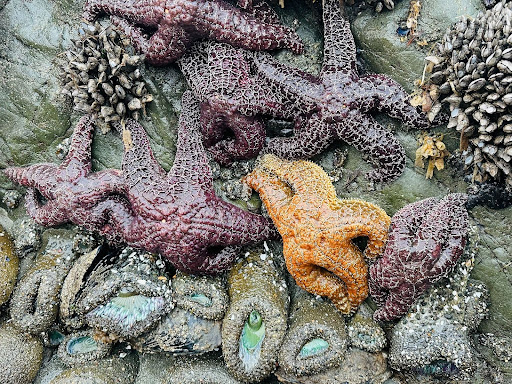
Bodega Bay, where we landed, has a calming aura with its salty air and wise waters, in stark contrast to the tumultuous Pacific Ocean. The bay listens rather than shows off, with boats trusting an invisible force to keep them afloat. The foghorns call out gently, and the crabs and starfish display their beauty in a quiet yet captivating manner.
The land in West Sonoma County doesn’t ask for change; it accepts you as you are. It allows for joy without guilt, beauty without pain, and spirituality without the need for dramatic displays of emotion. It simply says, “Be present. That’s enough.”
Meanwhile, Muir Beach lingers in my thoughts. The fog, cliffs, and land demand respect and attention, a stark contrast to the laid-back atmosphere of West Sonoma County. Each place loves different parts of me, with Muir Beach embracing my longing and spiritual depth while West Sonoma County celebrates my physical presence and nurturing qualities.
This journey has been confusing spiritually, as I was taught to associate love with intensity and sacrifice. However, the land in West Sonoma County offers a different kind of love – one of ease and companionship. It has brought joy and laughter back into my life, allowing me to connect with nature in a more casual and lighthearted way.
As I drive home from Sebastopol, I come to the realization that my heart can love multiple places deeply. Muir Beach will always hold a special place in my heart, but West Sonoma County is slowly winning me over with its warmth and simplicity. This shift in allegiance is a sign of maturity, an embrace of aliveness rather than loyalty to suffering.
If loving this land is wrong, then I don’t want to be right. Please rewrite the text for me.