
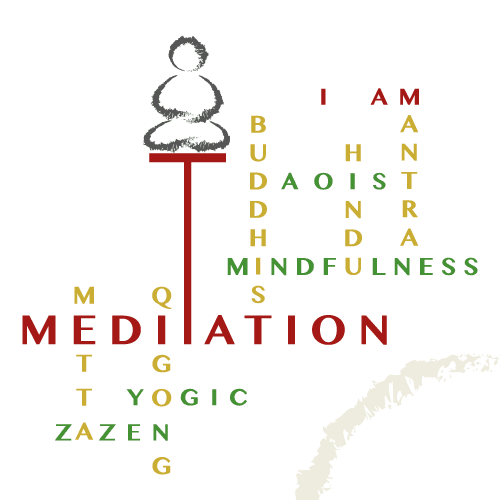
Did you know that there are as many meditation techniques as there are sports? And the only way to find out the best types of meditation for you is to try them.
As you may know, meditation has dozens of benefits, and everybody is doing it. You look for information online or on a bookstore, and see that there are a LOT of different styles of meditation. You wonder which way is best for you.
This is a very important question. Different types of meditation have different benefits. Some of them will work better for you than others—just like different sports or diets work better for some people than for others.
There are literally hundreds—if not thousands—of types of meditation, so here I will explore only the most popular ones. The purpose of this article is to help you experiment different meditation techniques, and find the ones that works best for you.
Finding the right style for you, and practicing it with the right approach, is one of the three essential Pillars of Meditation.
There is no cookie-cutter approach to meditation. You need to experiment many, and find the one that works best for your unique needs and personality. The type of meditation that is most helpful against anxiety, for instance, is not necessarily the best one against depression or for spiritual awakening.
If you prefer more dynamic meditation techniques, have a look at my walking meditation guide.
The advice regarding the posture of meditation is very similar among the different styles of seated practice, so I will go into more detail about it only once, when talking about the first technique (Zen meditation).
I have strived to include a “Is it for me?” section, with general observations about each practice. Keep in mind these are tentative; they are there to give some direction, and potentially any person could feel attracted to any of these modalities.
This article does NOT tell you which is “the best” type of meditation – because there is no such thing, and I’m not here to create controversy. Also, I have here focused more on meditative practices; I may write another article on other similar practices, that are more about relaxation or contemplation.
If you are a beginner, you may also enjoy the post on meditation for beginners – how to build the habit.
On the other hand, if you are looking for the historical background of how meditation developed over the centuries, check out my history of meditation article.
(This article is also available in Russian, Portuguese, Romanian, Croatian and Polish. Translation done by LiveAndDare readers.)
Types of Meditation PDF
By the way, do you want to have a PDF version of this article, for easy future reference?
GENERAL TYPES OF MEDITATION
Scientists usually classify meditation based on the way they focus attention, into two categories: Focused Attention and Open Monitoring. I’d like to propose a third: Effortless Presence.
Focused attention meditation
Focusing the attention on a single object during the whole meditation session. This object may be the breath, a mantra, visualization, part of the body, external object, etc. As the practitioner advances, his ability to keep the flow of attention in the chosen object gets stronger, and distractions become less common and short-lived. Both the depth and steadiness of his attention are developed.
Examples of these are: Samatha (Buddhist meditation), some forms of Zazen, Loving Kindness Meditation, Chakra Meditation, Kundalini Meditation, Sound Meditation, Mantra Meditation, Pranayama, some forms of Qigong, and many others.
Open monitoring meditation
Instead of focusing the attention on any one object, we keep it open, monitoring all aspects of our experience, without judgment or attachment. All perceptions, be them internal (thoughts, feelings, memory, etc.) or external (sound, smell, etc.), are recognized and seen for what they are. It is the process of non-reactive monitoring of the content of experience from moment to moment, without going into them. Examples are: Mindfulness meditation, Vipassana, as well as some types of Taoist Meditation.
Effortless Presence
It’s the state where the attention is not focused on anything in particular, but reposes on itself – quiet, empty, steady, and introverted. We can also call it “Choiceless Awareness” or “Pure Being”. Most of the meditation quotes you find speak of this state.
This is actually the true purpose behind all kinds of meditation, and not a meditation type in itself. All traditional techniques of meditation recognize that the object of focus, and even the process of monitoring, is just a means to train the mind, so that effortless inner silence and deeper states of consciousness can be discovered. Eventually, both the object of focus and the process itself are left behind, and there is only the true self of the practitioner, as “pure presence”.
In some techniques, this is the only focus, from the beginning. Examples are: the Self-Enquiry (“I am” meditation) of Ramana Maharishi; Dzogchen; Mahamudra; some forms of Taoist Meditation; and some advanced forms of Raja Yoga. In my point of view, this type of meditation always requires previous training to be effective, even though this is sometimes not expressly said (only implied).
1) BUDDHIST MEDITATION TECHNIQUES
Zen Meditation (Zazen)
Origin & Meaning
Zazen (坐禅) means “seated Zen”, or “seated meditation”, in Japanese. It has its roots in the Chinese Zen Buddhism (Ch’an) tradition, tracing back to Indian monk Bodhidharma (6th century CE). In the West, its most popular forms come from Dogen Zenji (1200~1253), the founder of Soto Zen movement in Japan. Similar modalities are practiced in the Rinzai school of Zen, in Japan and Korea.
How to do it
It is generally practiced seated on the floor over a mat and cushion, with crossed legs.
In the past, meditation was commonly done in the lotus or half-lotus position, but nowadays most practitioners sit in a more relaxed manner. Some sit on a chair, while others sit with their back straight, from the pelvis to the neck, mouth closed, and eyes lowered, focusing on a spot on the ground about two or three feet in front of them.
There are two main ways to practice meditation. One is by focusing on the breath, counting each inhale starting from 10 and moving backward. The other method is called Shikantaza, where practitioners simply sit and observe the present moment without focusing on anything specific.
Zazen, or Zen meditation, is a very disciplined practice that is often done in Zen Buddhist centers with a strong sense of community. It involves keeping the right posture and may include elements such as prostrations, rituals, chanting, and group readings of Buddhist teachings.
Vipassana meditation, on the other hand, focuses on developing insight and clear seeing. It involves starting with mindfulness of breath to stabilize the mind and then observing bodily sensations and mental phenomena without clinging to them. This practice helps practitioners develop concentration and clear insight into the impermanent, unsatisfactory, and empty nature of existence. As a result, practicing Mindfulness Meditation and Loving Kindness Meditation can help develop equanimity, peace, and inner freedom in relation to our thoughts, emotions, and interactions with others. The key to Mathieu Richard’s happiness is revealed in this article. The benefits of Loving-Kindness meditation are explored in detail by Emma Seppälä, Ph.D in this article. According to the TM organization, learning Transcendental Meditation can only be done through a registered teacher. However, there is a similar technique called Natural Stress Relief, created in 2003 by a former TM Teacher. It is much cheaper to learn (47 USD instead of 960 USD) and has removed some mystical elements of TM practice, such as initiation (puja) and yogic flying. You can find more information about NSR in comparison to TM here and here.
Personally, I do not feel comfortable recommending Transcendental Meditation anymore, especially for those looking to delve deeply into meditation. To learn more, you can check out this answer I wrote on Quora and this in-depth video review. If you are interested in trying something similar for a fraction of the cost or for free, consider looking into NSR or Mantra Meditation.
In terms of Yogic Meditations, there is not one specific type of meditation referred to as “Yogic Meditation,” but rather several meditation types taught in the yoga tradition. Yoga, meaning “union,” has a history dating back to 1700 B.C. and aims for spiritual purification and Self-Knowledge. The practice includes rules of conduct (yamas and niyamas), physical postures (asanas), breathing exercises (pranayama), and contemplative practices of meditation (pratyahara, dharana, dhyana, samadhi).
Yoga offers a wide variety of meditation practices, including the third eye meditation, chakra meditation, gazing meditation, Kundalini meditation, Kriya Yoga, Sound Meditation (Nada Yoga), and Tantra. Each practice has its own techniques and benefits, and it is essential to approach them with caution and guidance, especially in more advanced practices like Kundalini meditation or Tantra.
Pranayama, a practice of breathing regulation, is not exactly meditation but serves as an excellent way to calm the mind and prepare it for meditation. The 4-4-4-4 technique is a commonly taught form of Pranayama that involves breathing in for 4 counts, holding for 4 counts, breathing out for 4 counts, and holding empty for 4 counts. This practice helps balance moods and pacify the body, making it a useful tool for meditation preparation. The most well-known types of meditation in Yoga include breathing, body awareness, mantra, and chakra meditation. Another popular type is Self-Enquiry, which involves investigating the question “Who am I?” to discover one’s true nature. This technique was popularized by Indian sage Ramana Maharshi and is used by contemporary teachers like Mooji and Eckhart Tolle.
Chinese meditation techniques, specifically Taoist meditations, focus on generating and circulating inner energy to quiet the body and mind, unify body and spirit, and harmonize with the Tao. There are different types of Taoist meditation, including Emptiness meditation, Visualization, and Breathing meditation. These practices aim to improve health, longevity, and inner peace. At times, this practice involves quietly observing the breath, similar to Mindfulness Meditation in Buddhism. In other traditions, it may involve following specific patterns of exhalation and inhalation to become directly aware of the “dynamisms of Heaven and Earth” through ascending and descending breath, similar to Qigong in Taoism or Pranayama in Yoga. Inner Vision (Neiguan) involves visualizing inside one’s body and mind, including organs, “inner deities”, qi movements, and thought processes. Internal Alchemy (Neidan) is a complex practice of self-transformation using visualization, breathing exercises, movement, and concentration, with some Qigong exercises simplifying internal alchemy practices. Most of these meditations are done seated cross-legged on the floor, with the spine erect, eyes half-closed and fixed on the point of the nose. Master Liu Sichuan recommends practicing by “joining the breath and the mind together” or focusing on the lower abdomen (dantian) for those finding it challenging. The followers of Sufism are known as Sufis, and they engage in various spiritual practices, many of which have been influenced by the tradition of Yoga in India. Some of their main techniques include contemplation of God (muraqabah), Sufi Mantra meditation (zikr, jikr, or dhikr), heartbeat meditation, Sufi breathing meditation (including Five Elements Breathing), bond of Love meditation, gazing meditation, Sufi walking meditation, and Sufi whirling. These practices are explored further in an article on Sufi Meditation.
Guided Meditation, a modern phenomenon, offers an easier way to start meditation. It is available in audio or audio-visual formats and falls into categories such as Traditional Meditations, Guided Imagery, Relaxation & Body Scans, Affirmations, and Binaural Beats. Guided meditations can help introduce individuals to meditation, experiment with different techniques, and maintain focus during the practice.
If traditional meditation seems challenging or if specific benefits are sought, guided meditations can be a suitable starting point. Finding the right practice and connecting with a teacher can significantly impact the meditation journey. Understanding the meditation process and implementing tips for deep meditation can further enhance the practice. For those interested in teaching meditation, certification courses are available. Sharing meditation experiences with friends can also contribute to achieving the goal of leading a calm, centered, and focused life. Different individuals may find that different meditation techniques suit them best, so it’s advisable to experiment with a few before settling on one that works for you.
When it comes to popular meditation methods, some of the most well-known types include Mindfulness, Mantra meditation, Trataka, TM, Vipassana, Loving-Kindness, Chakra meditation, Zazen, Kundalini meditation, Self-enquiry, Taoist meditation, and Yoga Nidra.
There are various mindfulness meditation techniques, with the main ones being focused attention meditation (where you concentrate on the breath) and open-monitoring meditation (where you observe thoughts, sensations, and feelings without judgment).
For those interested in Buddhist meditation, options include Vipassana, Samatha, Loving-Kindness Meditation (metta), Zazen, Koan, Walking meditation, and various Tibetan Buddhist practices.
In Japanese meditation, Zazen is the most well-known type, although it originated in China or India and was later adapted in Japan.
As for advanced meditation techniques, practices like Dzogchen, Zuowang, Kundalini, and Self-Enquiry are often considered more advanced, but the complexity of a meditation practice ultimately depends on the individual practitioner.
The purpose of meditation can vary greatly from person to person, ranging from seeking liberation from suffering to achieving altered states of consciousness or simply improving physical and mental well-being.
While there is no definitive answer, some speculate that Mantra Meditation and Gazing are among the most ancient meditation practices.
For those looking for an easy way to start meditating, counting breaths or repeating a mantra are two simple techniques to try.
Regarding Yoga as a form of meditation, it depends on the context in which Yoga is practiced. While physical Yoga exercises are not inherently meditative, they can be done in a mindful manner. In its original form, Yoga can be seen as a type of meditation practice. Please rewrite the following sentence so it is more clear:
“The project was completed by the team in a timely manner.”
“The team completed the project on time.” Please rephrase the following text: