
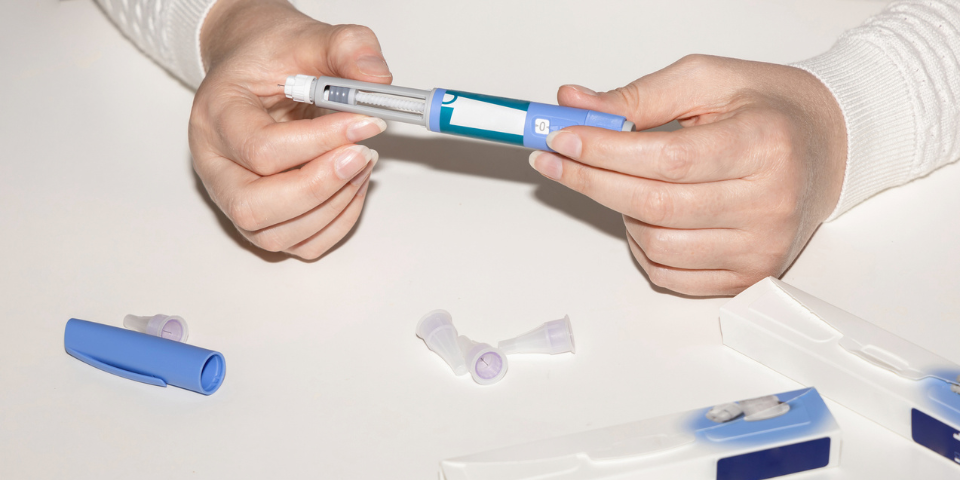
If you’ve been searching for new ways to advance your weight loss efforts, you’ve probably heard about incretin mimetic drugs like Mounjaro, Ozempic, Rybelsus, Wegovy, and Zepbound. Many people have reported dramatic weight loss by taking these types of medications.
But what happens when you stop taking incretin mimetics for weight loss? Do you gain weight back after quitting, or do you have to take them forever to maintain your results?
Short answer: When you stop taking incretin mimetics, you will likely regain most of the weight you lost.
That can be discouraging when you consider the downsides of long-term use. For starters, there’s the cost — both Mounjaro and Ozempic have a list price of about $1,000 for a month’s supply. Out-of-pocket costs will vary based on your insurance plan, but they can add up quickly, especially if you have to factor them into your monthly budget forever.
These medications are also relatively new to the scene, which means their long-term effects may not be fully understood. It’s important to weigh all the potential risks and rewards before deciding whether incretin mimetics are right for you. And, of course, you should always talk to your doctor before starting (or stopping!) any medication.
If you’re considering incretin mimetics or their kin for weight loss, here’s what you need to know.
How Do Mounjaro and Ozempic Work?

Mounjaro, Zepbound, Ozempic, Rybelsus, and Wegovy work by mimicking metabolic hormones called incretins. Hence, these drugs are referred to as incretin mimetics.
This hormonal mimicry enhances the body’s ability to maintain healthy blood sugar levels. It also helps reduce appetite and food intake by making you feel full faster and for longer after eating. As a result, many people experience weight loss as a secondary effect.
While these drugs all work in relatively similar ways, there are a few key differences when it comes to their mechanisms of action and intended use.
Semaglutide mechanism of action
Ozempic, Rybelsus, Wegovy are manufactured by Novo Nordisk and contain the same active ingredient, semaglutide. By mimicking a hormone called glucagon-like peptide-1 (GLP-1), semaglutide helps to promote insulin production, slow digestion, and suppress appetite.
Ozempic (injectable) and Rybelsus (pill form) are both FDA-approved as first-line treatments for type 2 diabetes. However, doctors will sometimes prescribe these medications off-label — i.e., not as directed — for weight loss.
Wegovy, on the other hand, is an FDA-approved, injectable version of semaglutide formulated specifically for weight management. It’s intended for adults with obesity or overweight adults with at least one weight-related health condition.
Tirzepatide mechanism of action
The active ingredient in both Mounjaro and Zepbound is tirzepatide. Like semaglutide, tirzepatide mimics the GLP-1 hormone and increases insulin sensitivity. But tirzepatide’s mechanism of action also mimics the gastric inhibitory peptide hormone (GIP), which helps to promote insulin secretion and regulate appetite and satiety.
“There have been studies that show that tirzepatide results in more weight loss than semaglutide,” says Mir Ali, MD, bariatric surgeon and medical director of MemorialCare Surgical Weight Loss Center at Orange Coast Medical Center in Fountain Valley, CA. “This has been attributed to affecting two receptors rather than one.”
Mounjaro and Zepbound, which are both administered via once-weekly injections, are manufactured by Eli Lilly. Mounjaro is FDA-approved as a diabetes medication, while Zepbound is approved for weight management in adults with obesity, or overweight adults with at least one weight-related health condition. (Sound familiar?)
Like Ozempic and Rybelsus, Mounjaro may be prescribed off-label for weight loss.
What Happens When You Stop Taking GLP-1 Drugs for Weight Loss?

Incretin mimetics can help with weight management while you’re taking them. But when you stop taking these drugs, your metabolic function will revert back to its pre-medication state, and the number on the scale will likely follow suit.
Here are a few common side effects of stopping Mounjaro, Ozempic, and the like:
1. Your appetite will make a comeback
“[Incretin mimetics’] primary effect for weight loss is to suppress the appetite and slow the emptying of the stomach,” Ali says. “Once the medication is stopped, the appetite returns to its previous state and the stomach resumes emptying at the normal rate. These processes can lead to a person wanting to eat more.”
2. You’ll likely regain much of the weight you lost
Once your appetite is back in full swing, you’ll need to keep a close eye on your calorie intake. “If the patient is not careful, they can start regaining weight,” Ali says.
One clinical trial found that, a year after stopping incretin mimetics, participants had regained an average of two-thirds of the weight they had originally lost. Their cardiometabolic improvements went back to baseline, too.
3. Your blood sugar may rise
When you stop taking incretin mimetics, Ali says, insulin secretion returns to its previous state and you may notice an increase in your blood glucose levels. In a recent peer-reviewed study, researchers divided participants into four groups. Three groups took tirzepatide in varying doses, while the fourth group was given the type 2 diabetes drug dulaglutide.
One year later, all three tirzepatide groups had greater improvements in blood glucose levels than the dulaglutide group. However, two months after stopping treatment, all four groups had re-elevated blood glucose levels — and the tirzepatide groups were already experiencing rebound weight gain.
The study authors concluded that their findings “suggest a necessity for continuous prescription or careful follow-up when stopping.”
Can You Just Stop Taking Mounjaro and Ozempic?
Given the extent to which long-term drugs like semaglutide and tirzepatide affect the body, quitting cold turkey is not advised without the guidance of a physician.
It is currently unclear whether discontinuing the use of incretin mimetics will lead to significant withdrawal symptoms. However, recent research suggests that many individuals may experience a rapid rebound in blood glucose levels and weight gain upon stopping these medications. These effects are not considered withdrawal symptoms but rather a return to the patient’s previous physiological state.
To maintain weight loss after discontinuing semaglutide and tirzepatide, it is essential to incorporate certain lifestyle strategies. Making substantial and long-term dietary and lifestyle changes can increase the likelihood of keeping the weight off post-medication cessation.
It is crucial to consult a healthcare provider before making any decisions regarding the discontinuation or resumption of medications like Mounjaro or Ozempic.
If you are seeking convenient healthcare options at home, Hello Alpha offers access to board-certified professionals who can provide guidance on weight loss, mental health, and GLP-1 drugs through 24/7 messaging with licensed clinicians.
While incretin mimetics are gaining popularity, it is important to note that they are designed for long-term treatment of chronic health conditions rather than as a quick fix for weight loss. These medications are typically recommended for patients classified as obese with a body mass index over 30 or over 27 with other co-morbid conditions.
It is essential to remember that weight loss drugs are not a substitute for a balanced diet and regular exercise. In fact, a significant portion of the weight lost while taking GLP-1 medications may be attributed to the loss of muscle mass.
GLP-1 Fitness Formula on BODi was developed to counteract this effect by focusing on strength training, cardiovascular exercise, and mobility routines to preserve muscle mass, improve metabolic and heart health, and prevent joint and muscle stiffness.
A balanced diet rich in nutrients remains crucial for obtaining essential vitamins, minerals, fiber, and antioxidants.
The half-life of tirzepatide is approximately five days, while semaglutide stays in the system for around seven days. When discontinuing these drugs, it may take up to a month for them to be completely eliminated from the body.
While these medications are typically prescribed for weekly use, they are intended for long-term use due to the chronic nature of obesity. Patients may need to remain on these medications indefinitely to maintain their effectiveness. The following sentence will be rewritten:
Original: “I cannot attend the meeting tomorrow due to a prior commitment.”
Rewritten: “I have a prior commitment and will be unable to attend the meeting tomorrow.”