
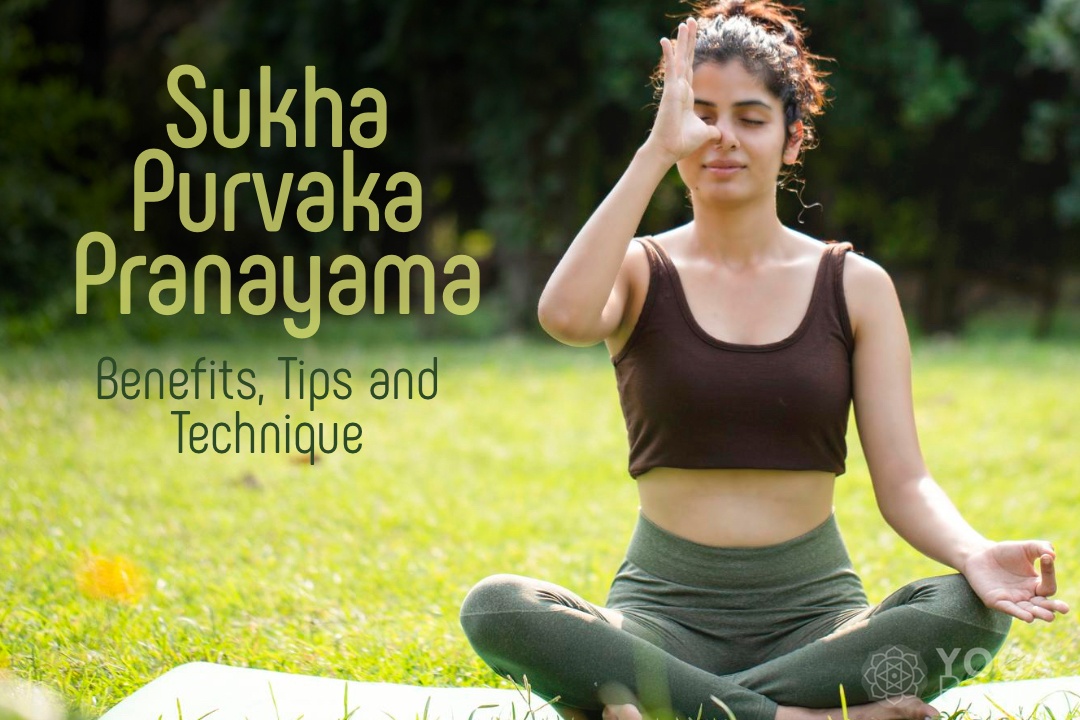
Utilizing the breath as a powerful tool in yoga practice allows for the control of prana, our life force energy, shaping our thoughts, emotions, and behaviors. An excellent intermediate breathing technique to foster a calm and serene mind is Sukha Purvaka Pranayama. This gentle yet effective practice entails inhaling through one nostril, holding the breath, exhaling through the opposite nostril, and pausing the breath for an equal duration. Sukha Purvaka Pranayama not only centers the mind but also reduces stress, improves lung function, and brings a delightful feeling of lightness and well-being to daily life.
Understanding Sukha Purvaka Pranayama
Sukha Purvaka Pranayama, also known as Shwasa Prashwasa, Gita Pranayama, or Sukha Pranayama, is a yogic breathing technique. “Sukha” translates to “pleasant, gentle, mild, or comfortable,” while “purvaka” means “previous, prior, first.” Hence, Sukha Purvaka Pranayama means “Easy comfortable breathing.” This technique involves inhaling through one nostril, holding the breath, exhaling through the opposite nostril, and suspending the breath, all for an equal count of 4, 6, or 8.
Benefits of Sukha Purvaka Pranayama
- Reduces Stress and Anxiety: By slowing down the breath rate and deepening all phases of the breath cycle, this practice establishes a steady breathing rhythm, calming the mind and reducing restlessness, anxiety, and agitation.
- Improves Lung Function: This pranayama enhances respiratory health by involving controlled inhalation, retention, exhalation, and breath suspension, expanding lung capacity.
- Enhances Mental Focus: Known for enhancing mental focus and composure, this technique creates a sense of ease and relaxation in both mind and body, fostering mental clarity and tranquility.
- Balances Energy Pathways: Sukha Purvaka Pranayama balances the Ida (left) and Pingala (right) nadis, cleansing the energy pathways and awakening Kundalini energy for increased vitality and overall well-being.
- Cardiovascular Effects: Structured breath control in this exercise can lower heart rate and alleviate high blood pressure symptoms.
- Induces Lightness in Mind and Body: Regular practice of Sukha Purvaka Pranayama brings a feeling of lightness (Laghima) to the mind, heart, and body, contributing to a sense of well-being and ease in daily activities.
Using Kumbhaka (Breath Retention)
An integral aspect of Sukha Purvaka Pranayama is breath retention after inhalation and exhalation. “Kumbhaka,” translating to “breath retention,” strengthens breathing, stabilizes senses, increases inner awareness, calms the mind, and energizes the body. It is crucial not to hold the breath beyond discomfort. Advanced yoga practitioners can incorporate one or more bandhas with kumbhaka for a more intense practice.
Cautions and Contraindications
While Sukha Purvaka Pranayama is generally safe, there are precautions to consider:
- Pregnant individuals and those with high blood pressure, anxiety disorders, lung, heart, eye, or ear issues should avoid breath retention. Instead, focus on equalizing inhalation and exhalation lengths.
- If you experience dizziness, lightheadedness, or discomfort, stop and return to a relaxed breathing pattern.
- Consult a qualified instructor or healthcare provider before starting any new pranayama practice if you have health concerns.
How to Practice: Step-by-Step Instructions
Sukha pranayama involves four breath cycle phases—inhalation, retention, exhalation, and suspension—each held for an equal count. It combines Nadi Sodhana (Alternate Nostril Breathing) and Sama Vritti (Equal Breathing), so familiarity with these exercises is recommended before attempting this technique.
1. Find Your Seat
Sit comfortably cross-legged on the floor with a straight back. Place the back of your hands on your legs with palms up and index finger and thumb tips touching (Jnana Mudra). Ensure your body is relaxed, especially the shoulders. If sitting on the floor is uncomfortable, use a chair with flat feet and a straight back. Alternatively, practice lying down with knees slightly raised by placing legs on a bolster.
2. Find Your Breath
Inhale and exhale through the nose with the mouth closed, focusing on a slow, even flow. Use diaphragmatic breathing, allowing the belly to rise and fall with minimal chest movement.
3. Set Your Pace
Deepen and slow your breath comfortably. Breathe at your own pace, adjusting if it becomes challenging.
4. Begin the Breath Cycle
- Block the right nostril with Vishnu Mudra and inhale through the left nostril for a count of 4.
- Hold the breath for a count of 4 while blocking the left nostril.
- Exhale through the right nostril for a count of 4, keeping the left nostril blocked.
- Hold the breath out for a count of 4 with both nostrils blocked.
- Inhale deeply through the right nostril (left nostril blocked) for a count of 4.
- Hold the breath for a count of 4 with both nostrils blocked.
- Exhale smoothly through the left nostril (right nostril blocked) for a count of 4.
- Hold the breath out for a count of 4 with both nostrils unblocked.
5. Find Your Flow
Repeat the four-part cycle for 2-6 additional breath rounds. As you become more comfortable, increase the duration of practice to 10-30 breaths or a maximum of 10 minutes. Continue as long as you can maintain focus on the breathing practice.
6. Rest and Integrate
After completing Sukha Pranayama, take time to rest and integrate the benefits. Transition slowly from your seated position to lying on your back in Savasana (Corpse Pose). This rest period allows your body and mind to fully absorb the calming effects of the breathing exercise. Close your eyes, notice any bodily changes like a slower heart rate or lightness, release tension, and relax deeply. Remain in Savasana for at least 5-10 minutes.
Practice Tips
- Start with shorter breath counts and gradually increase as you feel more at ease.
- Avoid pushing yourself to hold the breath longer than what feels natural.
- Early mornings, before meals, are ideal for an uninterrupted pranayama practice.
- For a more advanced practice, incorporate ujjayi breathing to add warmth and block external noise.
- To intensify the exercise, extend the count up to 6 or 8.
- If breathing becomes challenging, shorten the counts to 2 or 3 until it feels easier. You can also simplify the cycle by focusing solely on inhalations and exhalations.
- Stop and return to normal breathing if you experience discomfort, dizziness, or strain. Avoid exceeding your limits.
- Aim for daily pranayama practice to master the technique and reap its benefits.
- Maintain an equal ratio breathing pattern for the best results. If unable to do so, pause, rest briefly, and try again.
- Stay focused on the breath cycle. If thoughts wander, gently redirect your attention to your breathing.
- For beginners, seek guidance from a qualified instructor to ensure correct and safe practice.
Final thoughts
By incorporating Sukha Purvaka Pranayama into your regular yoga routine, you can experience reduced stress, improved lung function, balanced energy pathways, enhanced digestive health, and an overall sense of lightness and well-being.