
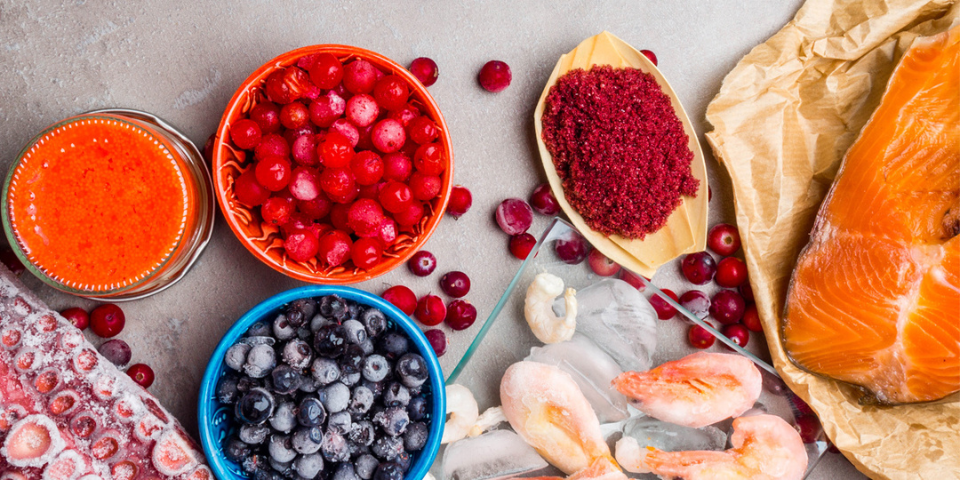
Consuming a variety of colorful foods goes beyond just a passing fad for social media posts. Bright and vibrant foods are rich in phytonutrients, which offer various benefits to the body, primarily due to their antioxidant-like and anti-inflammatory properties. Among the numerous phytonutrients available, one stands out — astaxanthin.
What exactly is astaxanthin? It might make you see red, so to speak. And in case you’re curious, it’s pronounced ahs-theh-zan-than.
What Is Astaxanthin?
“Astaxanthin is a type of carotenoid,” explains Lauren Manaker, MS, RDN, LD, the owner of Nutrition Now Counseling. “Carotenoids are responsible for the vibrant hues of foods like watermelon and tomatoes.” These compounds come in shades of red, orange, and yellow and include beta-carotene, lycopene, lutein, zeaxanthin, and the star of the show — astaxanthin.
“Astaxanthin is naturally present in certain algae and pink or red seafood such as salmon and shrimp,” notes Manaker. Interestingly, it’s the component that gives flamingos their pink color due to the algae, shrimp, and other crustaceans they consume!
Astaxanthin Foods

While astaxanthin supplements are popular, this antioxidant-like compound occurs naturally in various foods:
- Salmon
- Rainbow trout
- Shrimp
- Crayfish
- Quail
- Microalgae
- Fungi
- Algae
- Yeast
- Krill
- Sea bream
What Are the Benefits of Astaxanthin?

Research on the benefits of astaxanthin has been ongoing for years, although most studies have been either inconclusive due to their small scale or have been conducted on animals rather than humans. It has been studied for its potential effects on eye, heart, immune, and gut health. Here’s a glimpse into some of the findings on this carotenoid.
1. Support as an Antioxidant
Astaxanthin acts as a potent antioxidant, aiding in overall wellness by combating various health issues, as explained by Rizzo.
2. Brain Health
Astaxanthin is noteworthy for its ability to penetrate the blood-brain barrier. With its antioxidant-like and cell-supporting properties, it has been researched for its impact on brain health. Studies have focused on “its role in reducing natural oxidative damage in the brain associated with aging,” says Natalie Rizzo, MS, RD, author of The No-Brainer Nutrition Guide For Every Runner.
3. Heart Health
Studies on astaxanthin’s effects on heart health have shown promise due to its capacity to reduce oxidative stress. While experimental studies suggest its potential benefits for heart health, human studies are still limited, according to Rizzo. “Ongoing research is being conducted, but the outcomes appear promising.”
4. Potential for Enhanced Athletic Performance
A few human studies indicate that astaxanthin could enhance workout performance. Participants who took 4 mg of astaxanthin daily for six months showed three times more improvement in squat endurance compared to those taking a placebo.
Animal studies also suggest potential athletic advantages, with Rizzo noting that “supplementation with astaxanthin may increase time to exhaustion.” In a 45-day rat study, those given the supplement delayed exhaustion in a swim test by 29 percent.
5. Vision Support
Research on humans revealed that individuals taking astaxanthin along with lutein and other nutrients experienced reduced eye strain compared to those on a placebo.
In studies on mice, astaxanthin appeared to promote healthy vision by safeguarding retinal cells.
6. Skin Health
Astaxanthin has garnered attention from those seeking radiant skin. Two human studies indicated that both oral intake and topical application of astaxanthin led to improved skin moisture, elasticity, and reduced appearance of wrinkles and age spots.
A 2018 research review supported these findings, highlighting positive effects on the skin, but emphasized the need for further investigation to eliminate other influencing factors.
7. Immune Support
While human studies are lacking, research on animals suggests that astaxanthin may stimulate the production of antibodies and natural killer cells, bolstering the immune system, according to Rizzo. This is why it is sometimes likened to vitamin C, as both are antioxidants crucial for immune health.
What Are Astaxanthin’s Side Effects?

There is minimal concern regarding side effects of astaxanthin.
“In general, consuming this carotenoid is safe, especially when obtained from food sources,” assures Manaker. Some individuals have reported experiencing red stool when taking it in supplement form. Manaker sees little downside to incorporating this carotenoid into your diet.
However, a word of caution: If you have a seafood allergy or dietary restrictions, always verify the source of the supplement to avoid any adverse reactions, advises Manaker.
What Is the Best Brand of Astaxanthin?
You can purchase astaxanthin supplements online, at local health food stores, cooperatives, and many mainstream pharmacies and supermarkets.
Here are some popular astaxanthin supplements to consider:
- NOW Supplements, Astaxanthin, Extra Strength
- Jarrow Formulas Astaxanthin
- Sports Research – Astaxanthin
- Pure Synergy SuperPure Astaxanthin Extract
- Nutrex BioAstin Hawaiian Astaxanthin
When selecting a supplement, consider the following:
- How is the supplement manufactured? Is it processed without harmful solvents or additives?
- Is the company reputable? Do they provide evidence of conducted tests, ensuring that the product matches the label and has been tested for contaminants like microbes and heavy metals?
- Are the claims too good to be true? While the FDA regulates manufacturing practices for supplement companies, the same level of scrutiny may not apply to product claims. Therefore, thorough research on manufacturers and product inspection is crucial.
Please adhere to the recommended dosage instructions on the supplement label.
The post Astaxanthin: How One Nutrient Can Support Your Brain, Heart, Vision, and Skin appeared first on BODi.